

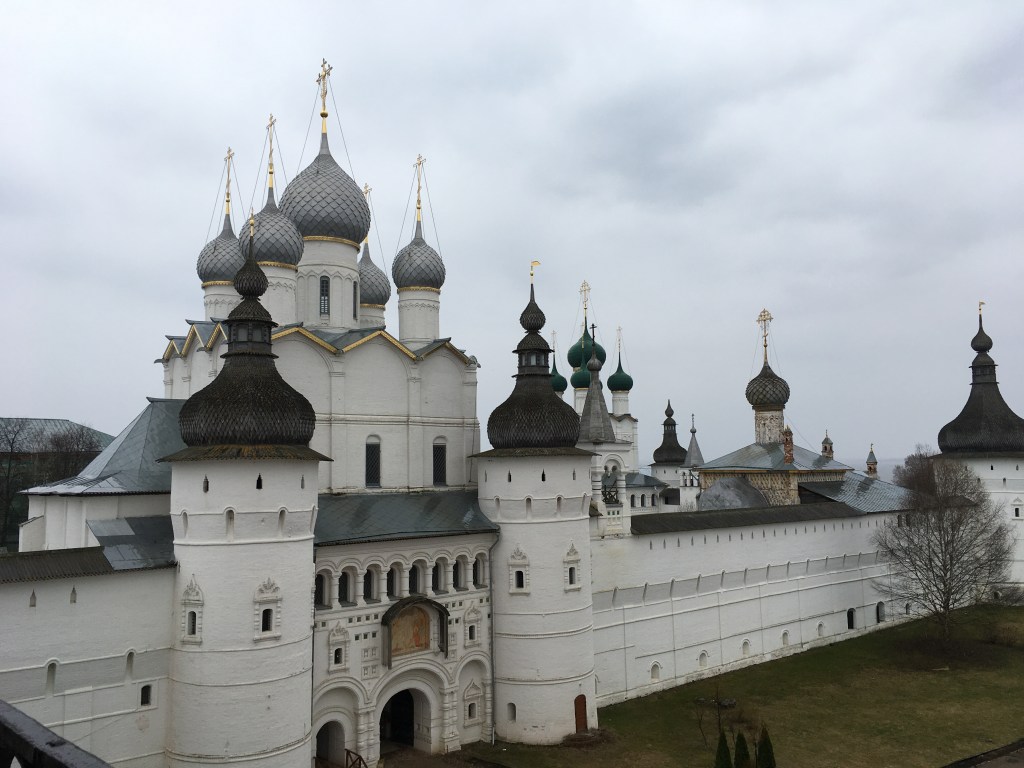
In April, when winter was truly over, we decided to spend the Orthodox Easter break visiting a few more towns on the Golden Ring. We set off on the Yaroslavl highway in the pouring rain, passing Pereslavl-Zalessky, sight of a previous trip. We headed on until we reached the small town of Rostov on the banks of Lake Nero. Turning off the highway we immediately noticed that large chunks of tarmac seemed to be missing! Cars were weaving in and out of their lanes trying to avoid the potholes which, because of the rain, weren’t always easy to spot – was it a small puddle or was it a large crater?! More on this later.
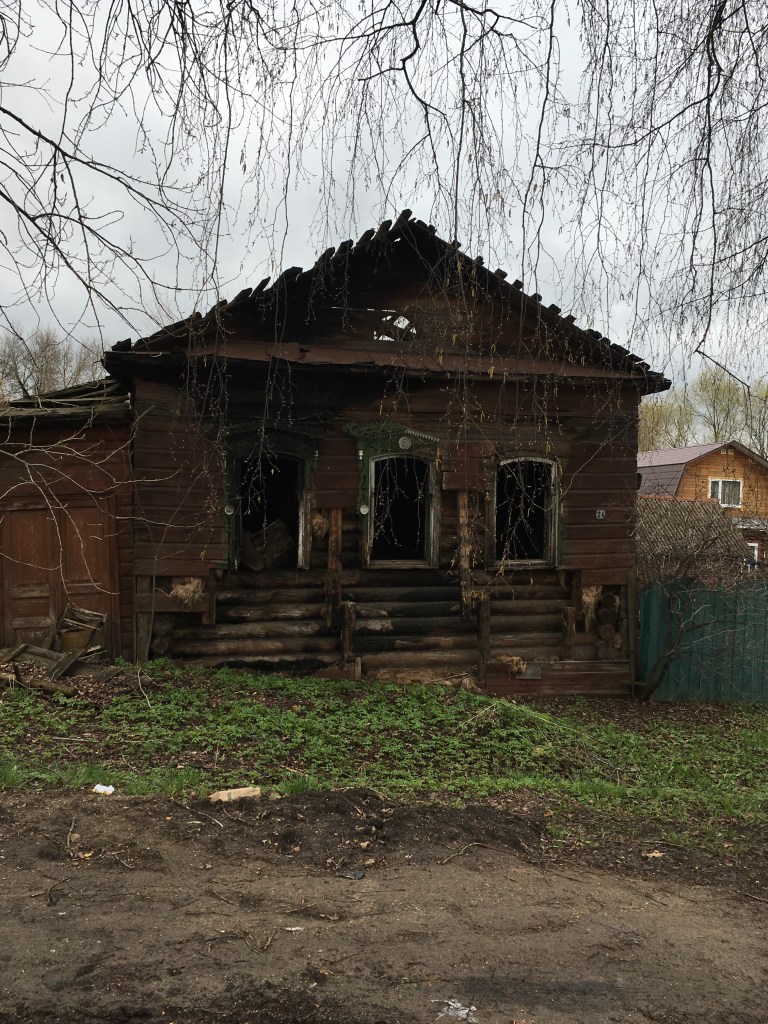
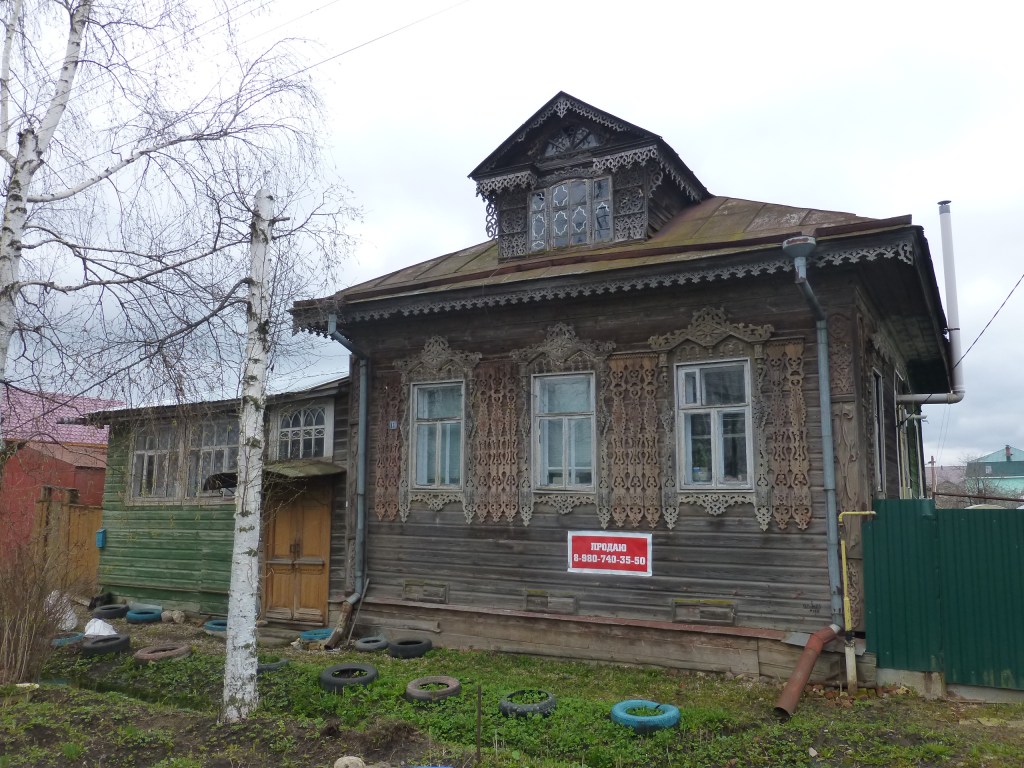
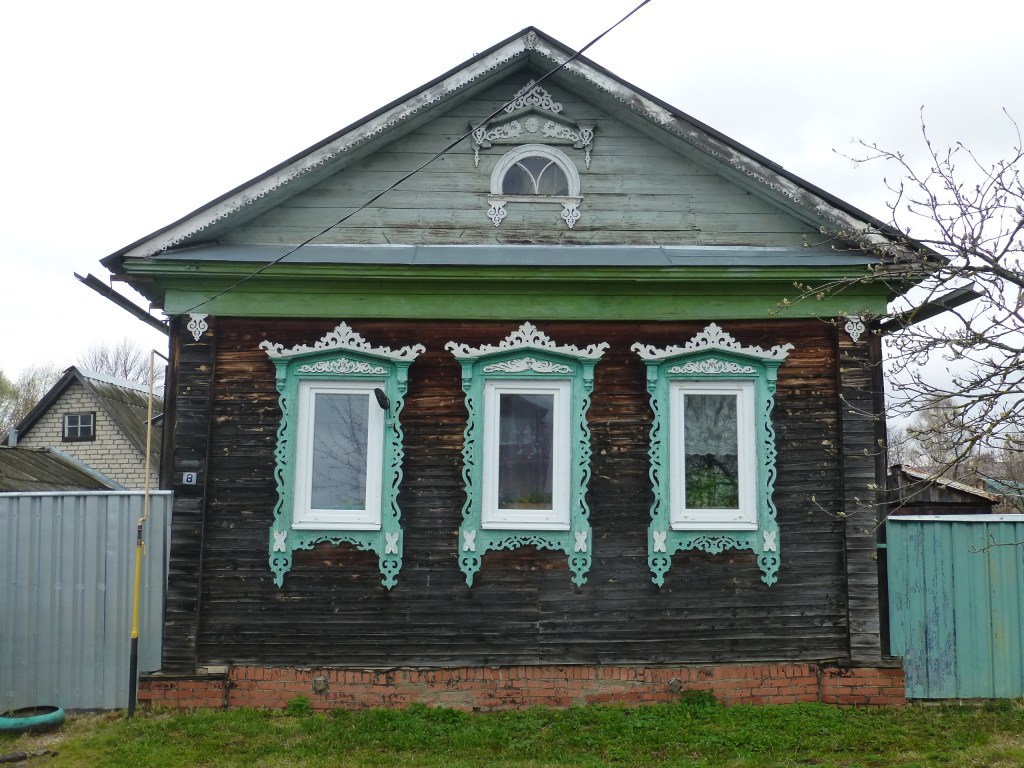
The next thing we noticed were the gleaming golden onion domes of the town’s monastery hidden behind the monastery wall on a promontory by the very large lake. As we got to the edge of the town we saw that the road was lined with beautiful old wooden houses – well they were old, but not necessarily beautiful as so many of them were in a very poor state of repair, some were burnt, some were subsiding at odd angles and many of them looked abandoned.
As we got closer to the town centre the wooden houses gave way to low rise stone buildings and then there, directly in front of us, through the drizzle, was the 17th Century Kremlin. All in white with silver domes – simple and beautiful.
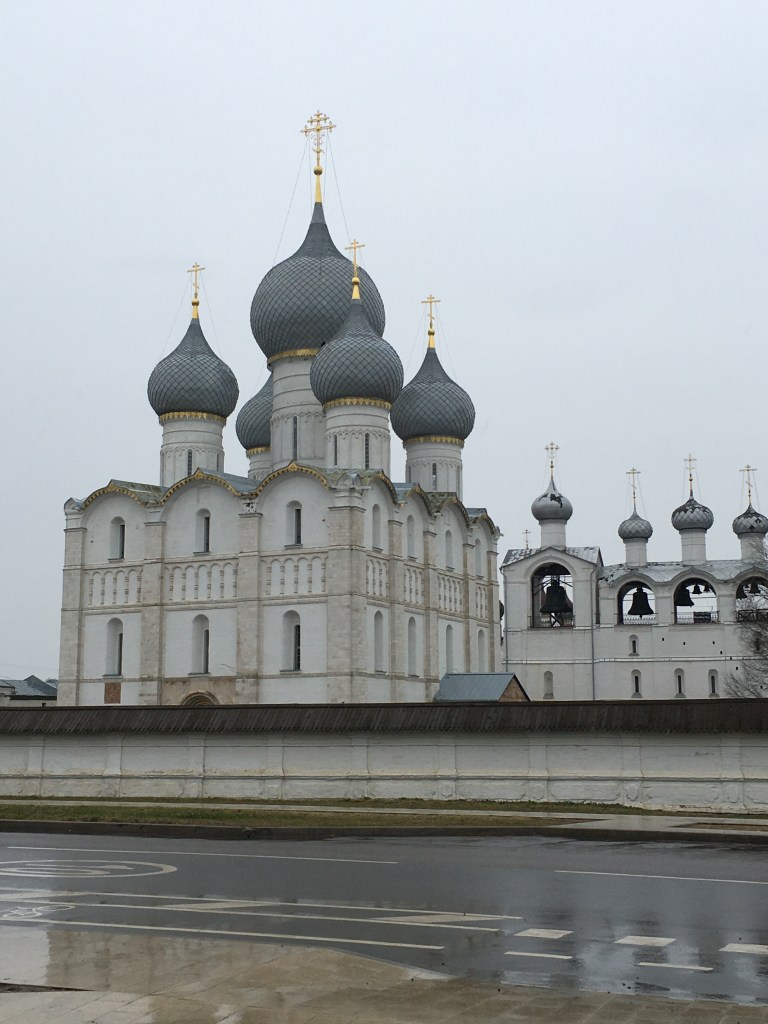
Rostov, like many of the other Golden Ring towns, was at one time the capital of the Vladimir-Suzdal area but has a completely different feel to the other Golden Ring towns that we have been to. It was almost as if the 20th Century had passed it by. The buildings in the centre of town were no more than two stories high (though when we left the next day we did pass through an area of soviet apartment blocks which were higher.) Our hotel, Russkoye Podvorye, was located in an 18th Century arcaded merchant’s house just a few minutes walk from the Kremlin with a nice restaurant.
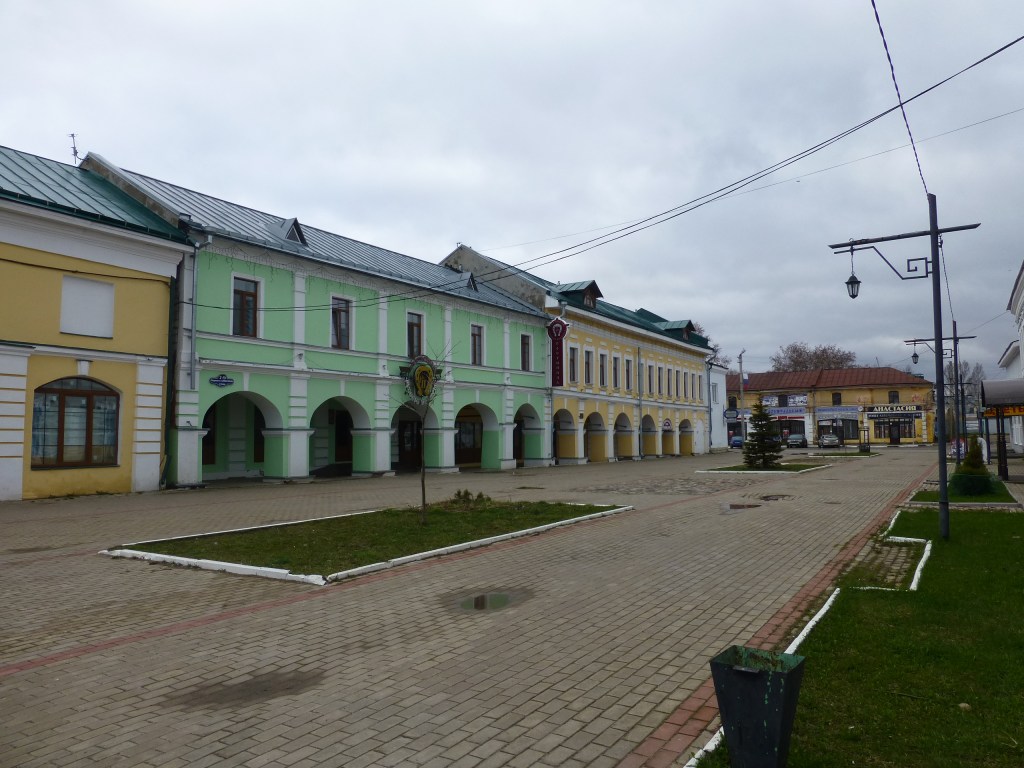
Our hotel 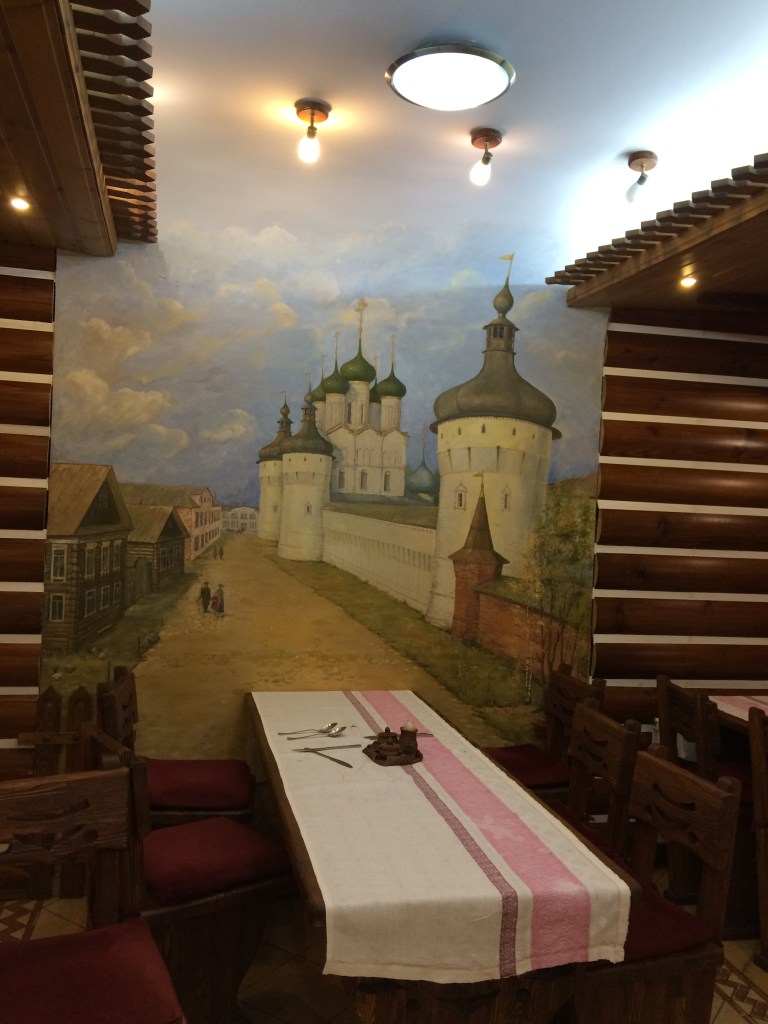
Hotel dining room 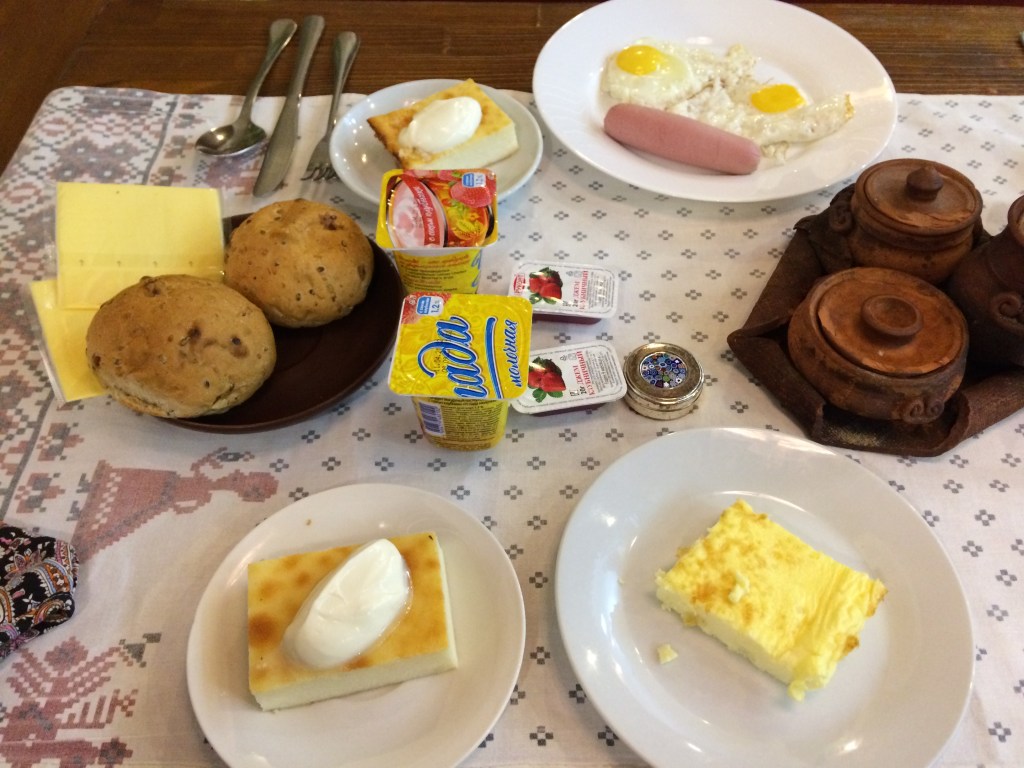
Hotel breakfast – you can choose between omelet or fried. Everything else comes as standard and was surprisingly good.
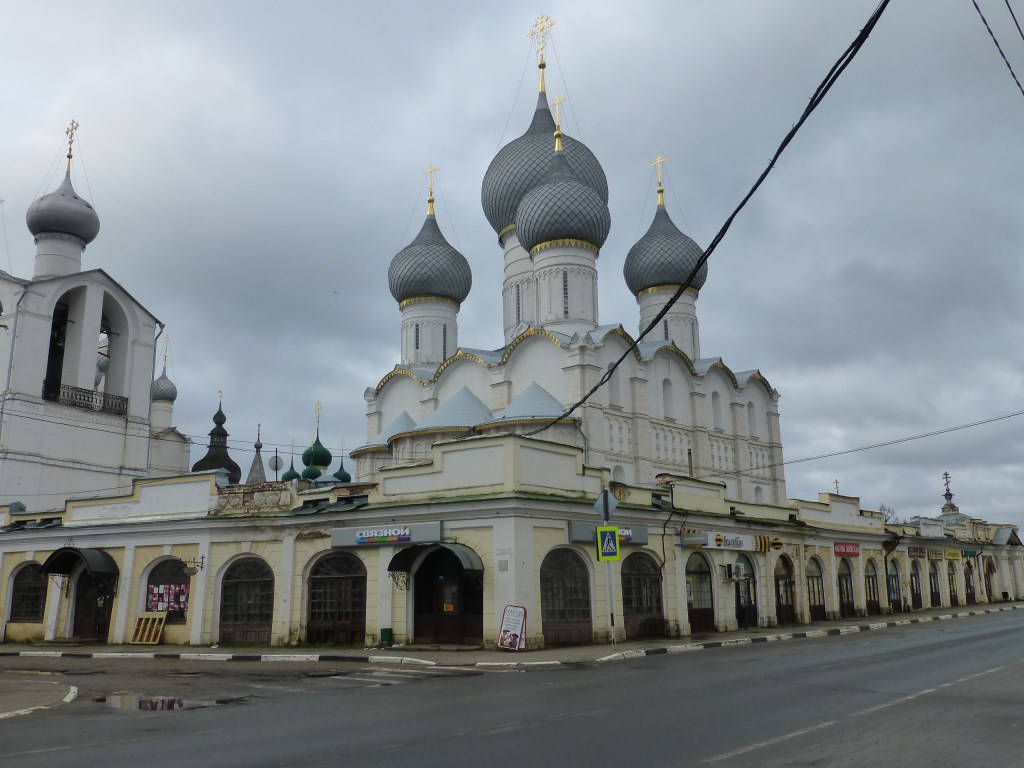
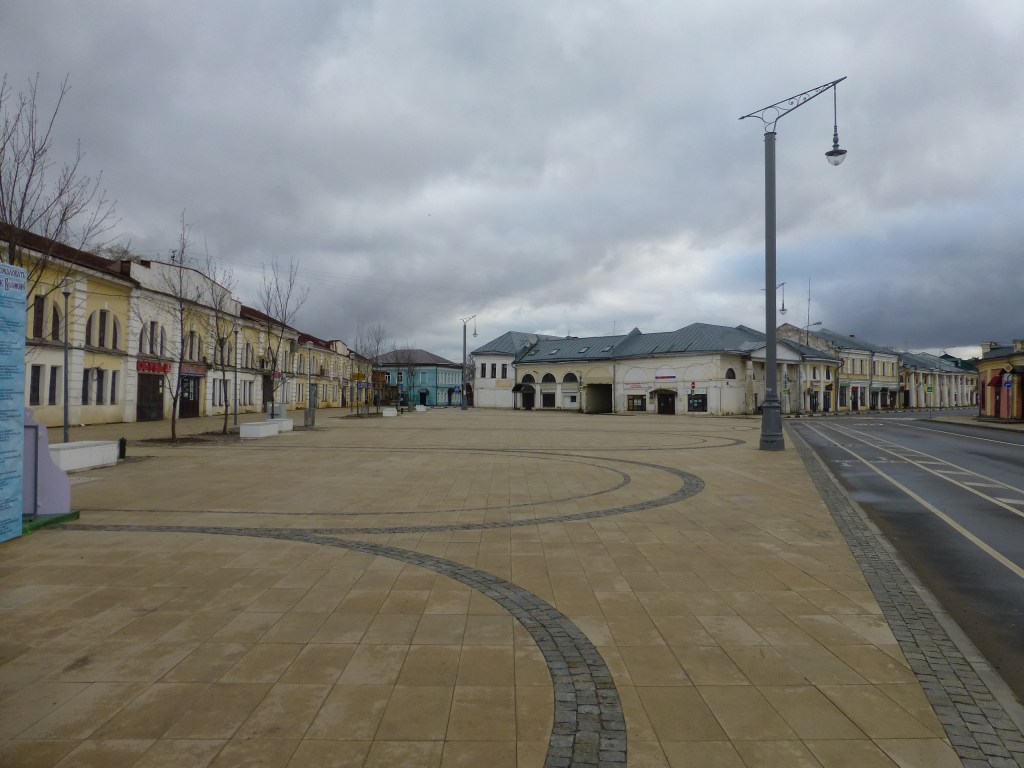
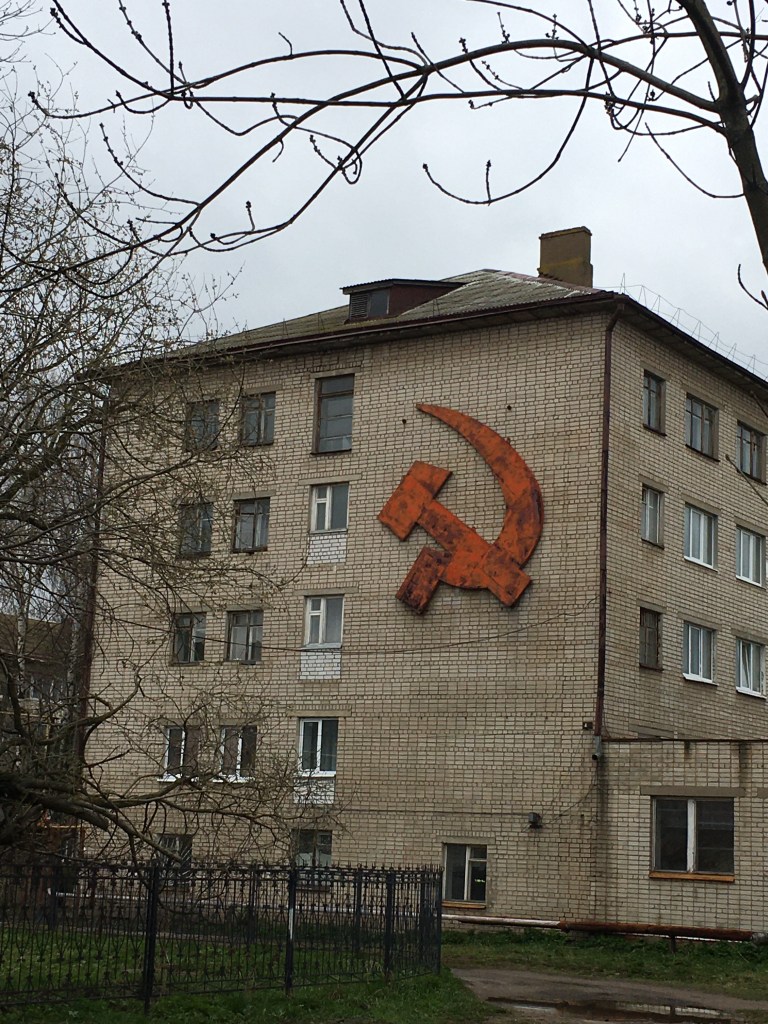
Dumping our bags we went out into the rain hunting for a cafe recommended by our guide book. The town square had a very deserted feel to it – maybe because of the rain or maybe because of Covid 19. We found the cafe, and found some of the people! After a lunch of tasty, traditional Russian soups we headed across the road to the Kremlin where we found the rest of the people.
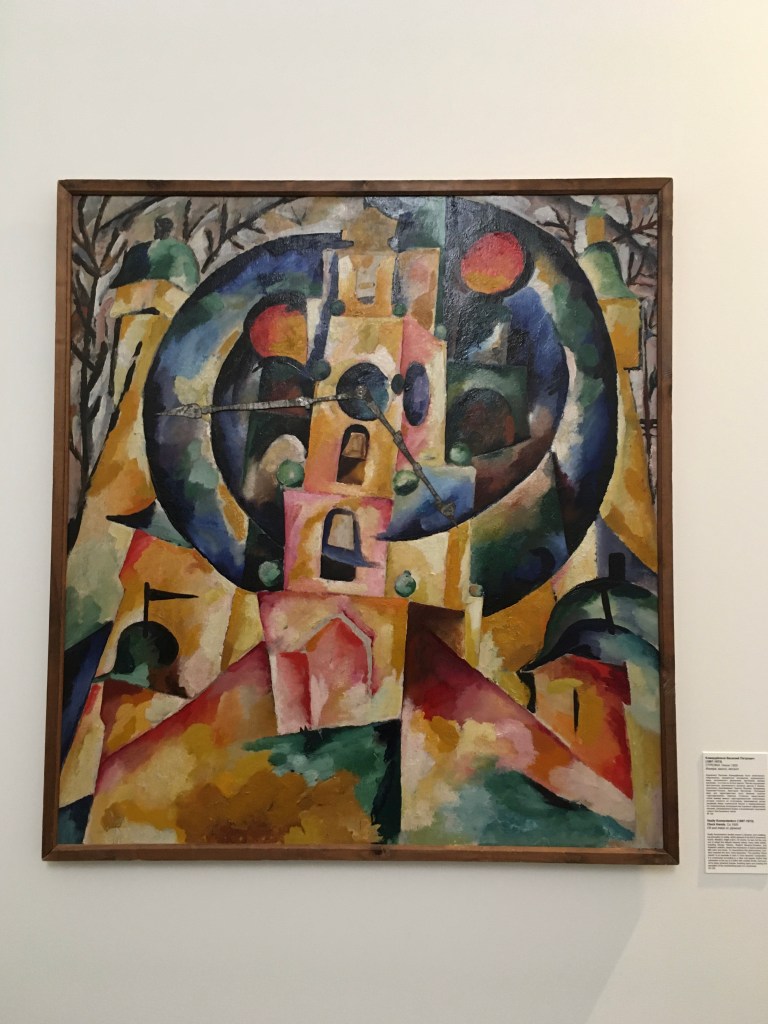
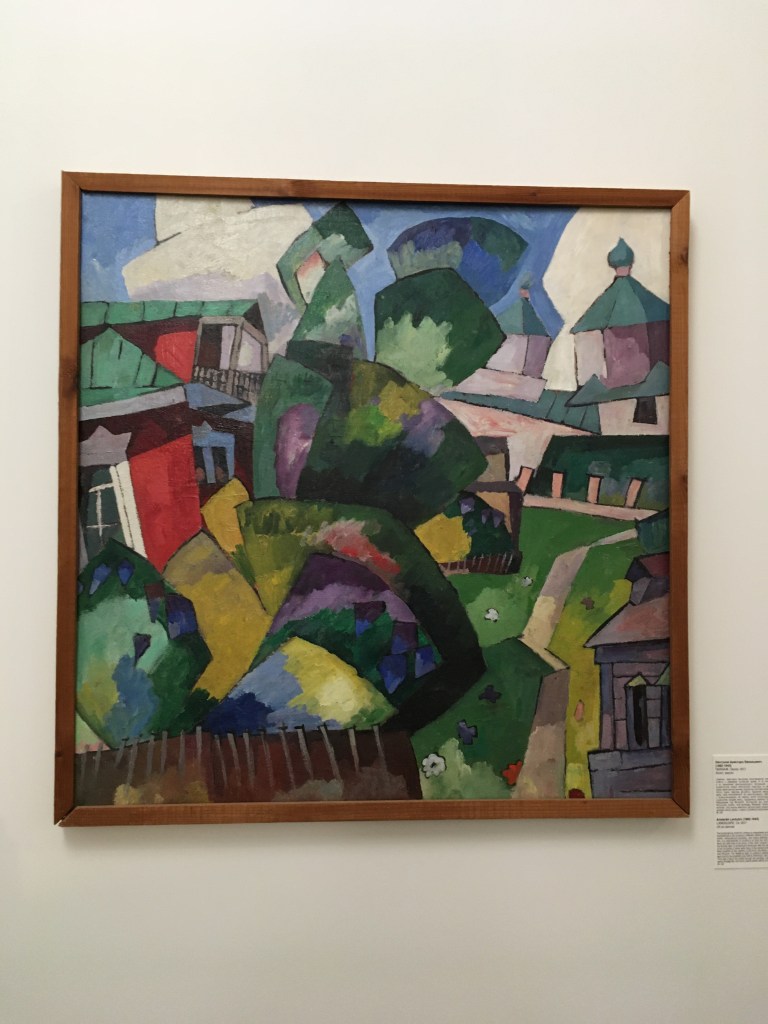
Not to be put off by rain or viruses the people had come! Inside the Kremlin walls were a selection of the usual richly decorated and beautiful Orthodox churches including the oldest structure in the town, the Assumption Cathedral, finished in 1512, and several small museums and exhibitions. Ducking out of the rain into the first open doorway we found the museum of enamelling for which Rostov is renowned. It contained some truly breathtaking enamelling work sadly I don’t have any photos. Not all the churches and buildings were open but we found the Museum of Church Antiquities in the ‘White Chamber’ and a great exhibition of leftist art in another chamber. We spent all afternoon in the Kremlin and because of the rain decided to save the golden domed Monastery of Saviour and St Jacob for the next day.
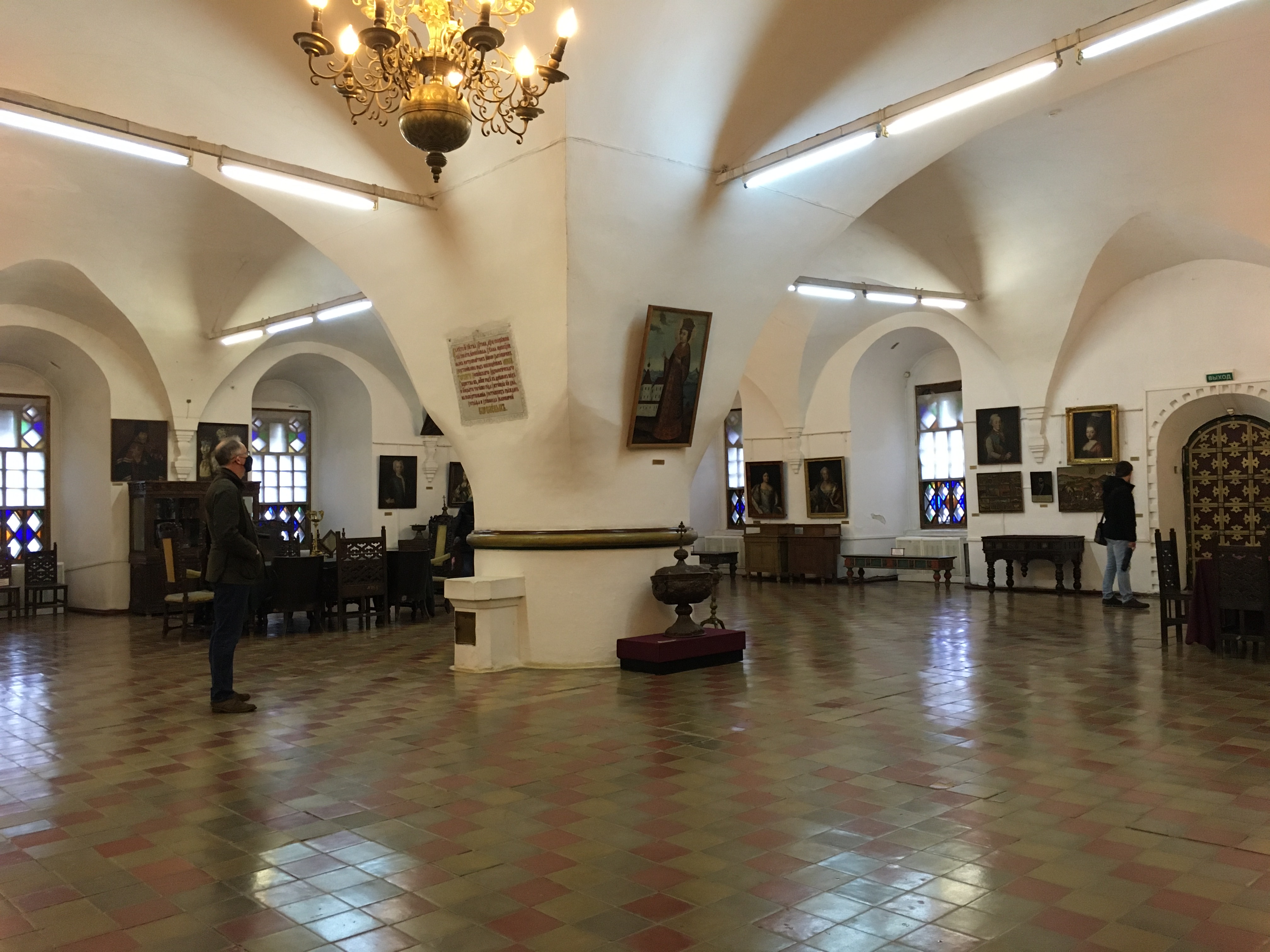
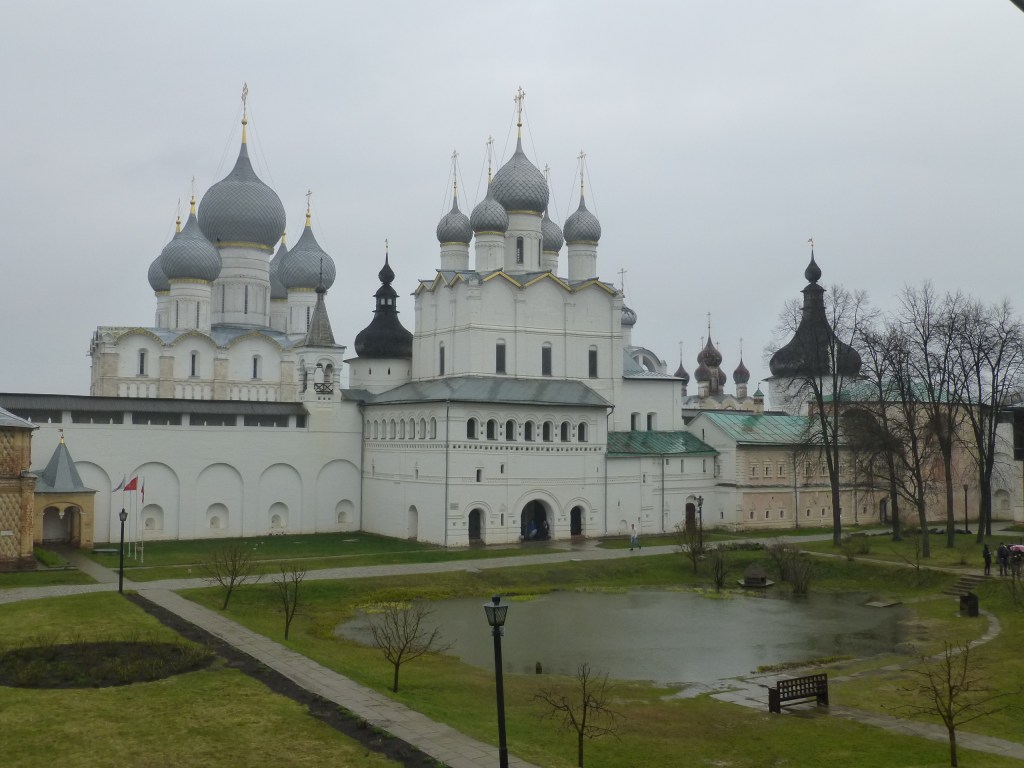
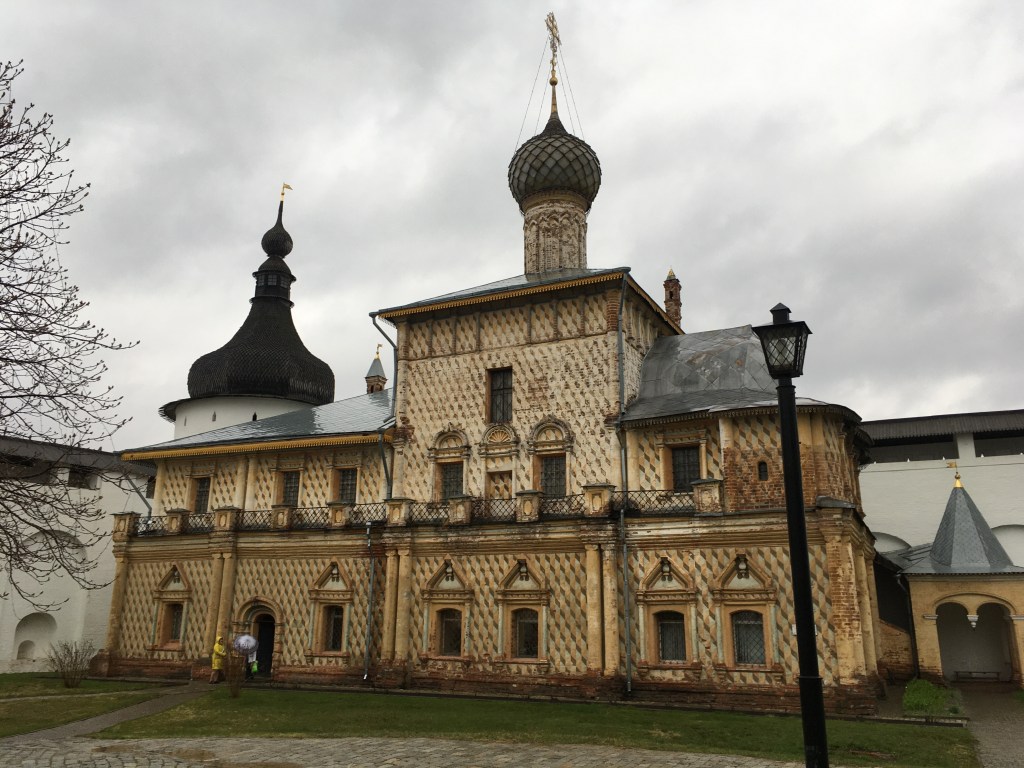
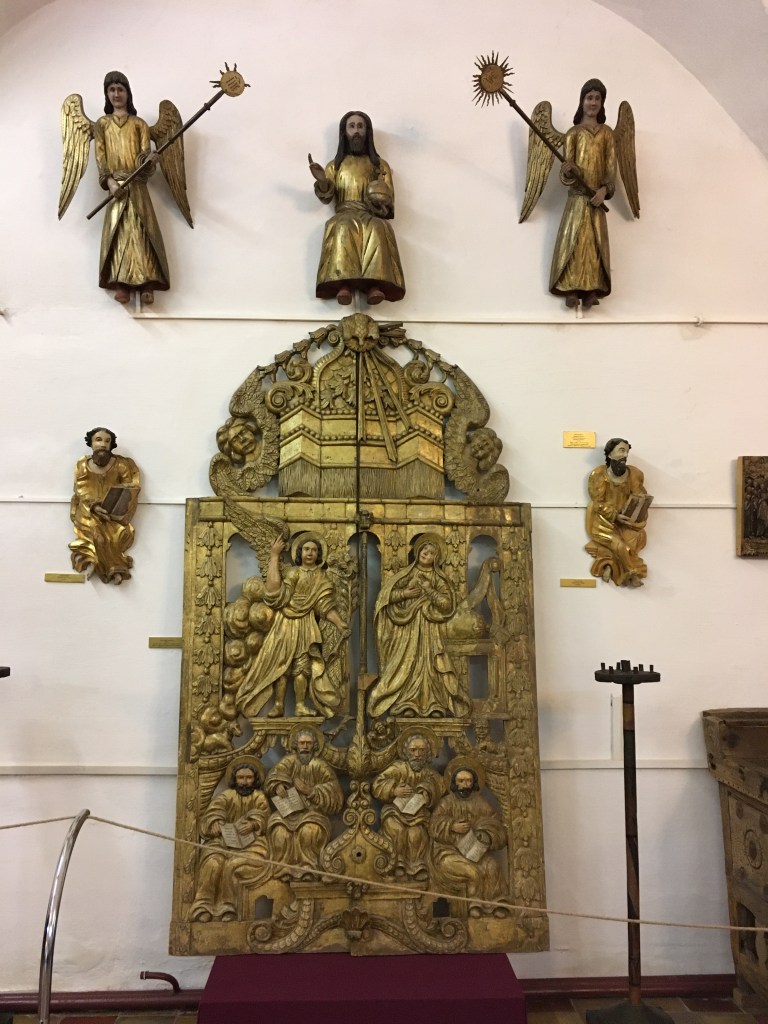
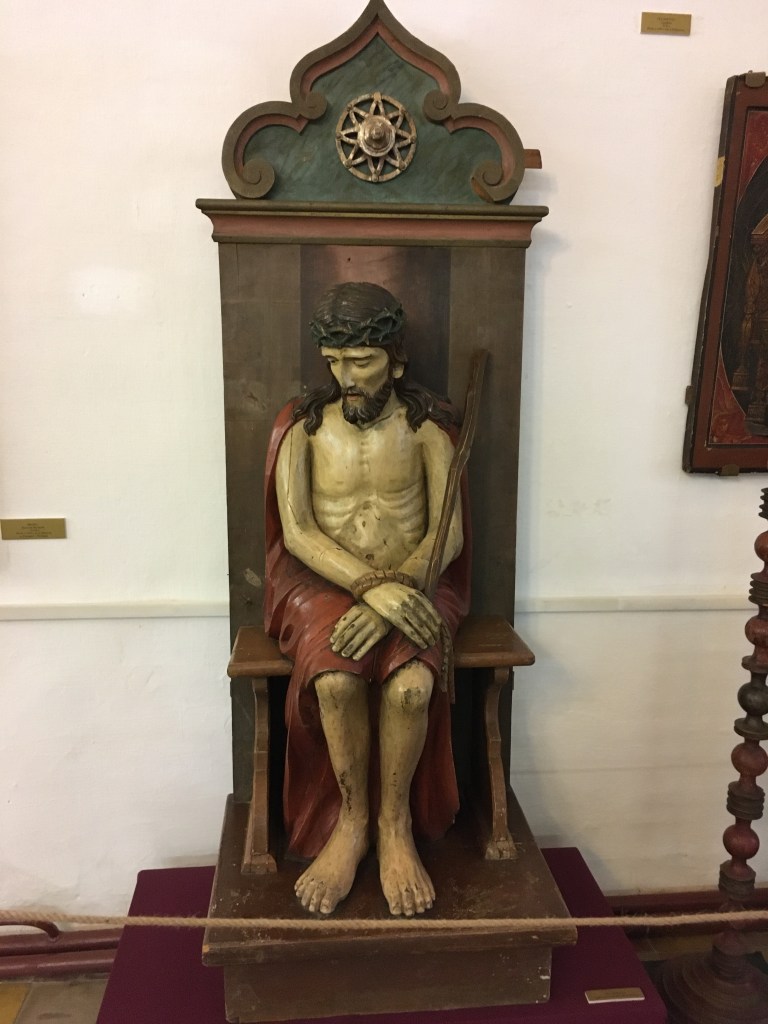
Day two the rain had eased and the sun was shining so we swung by the lake and the partially restored Saviour and St Jacob Monastery, before continuing out of town to Borisoglebsky and its charming fortress Monastery built in 1363.
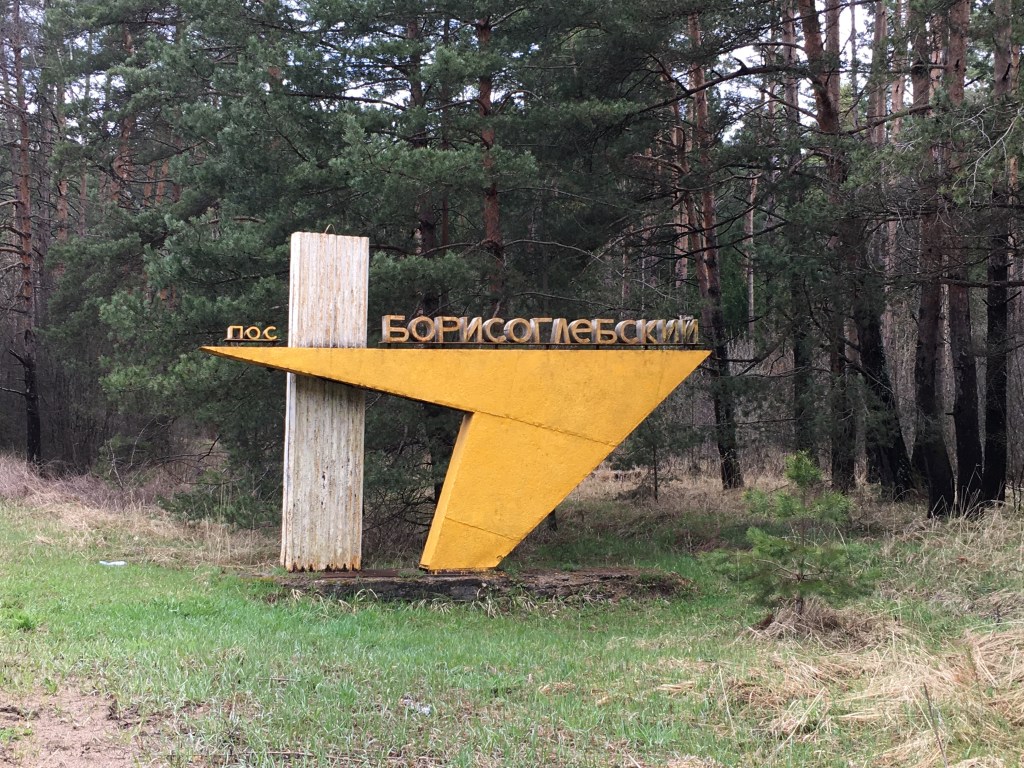
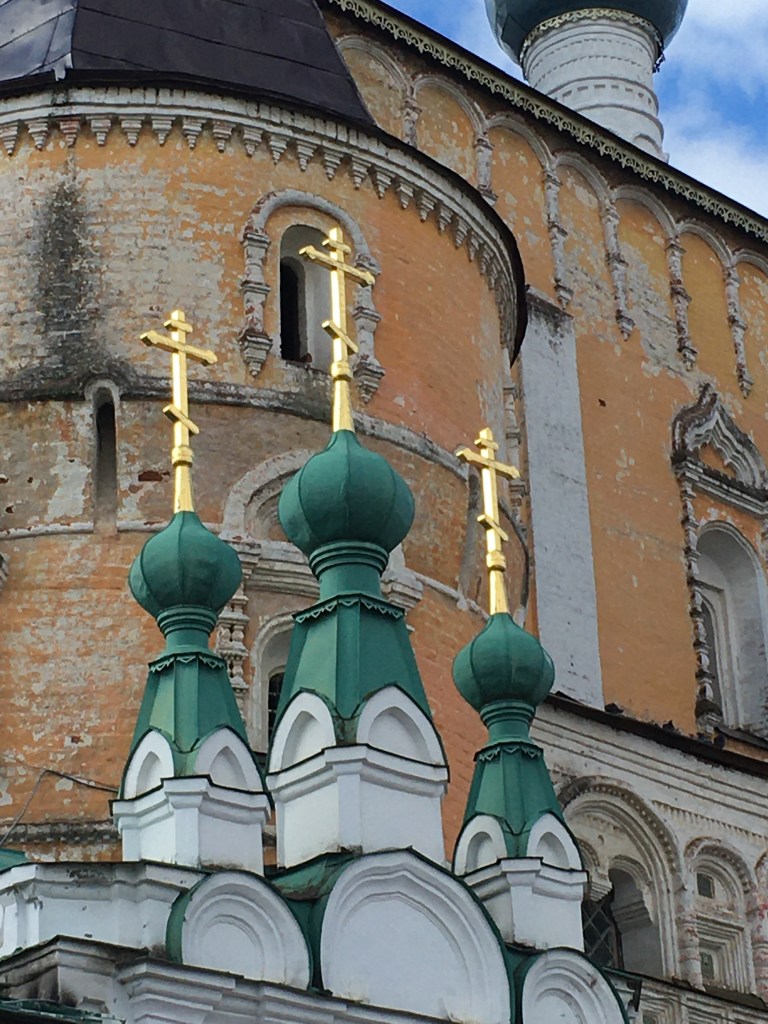
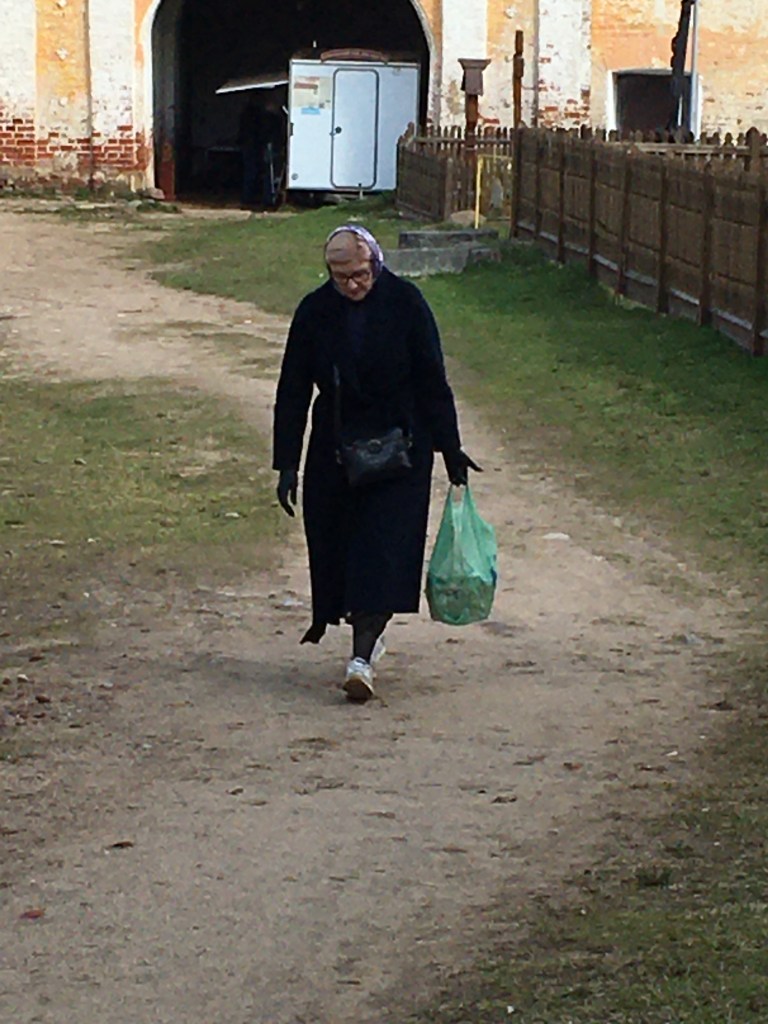
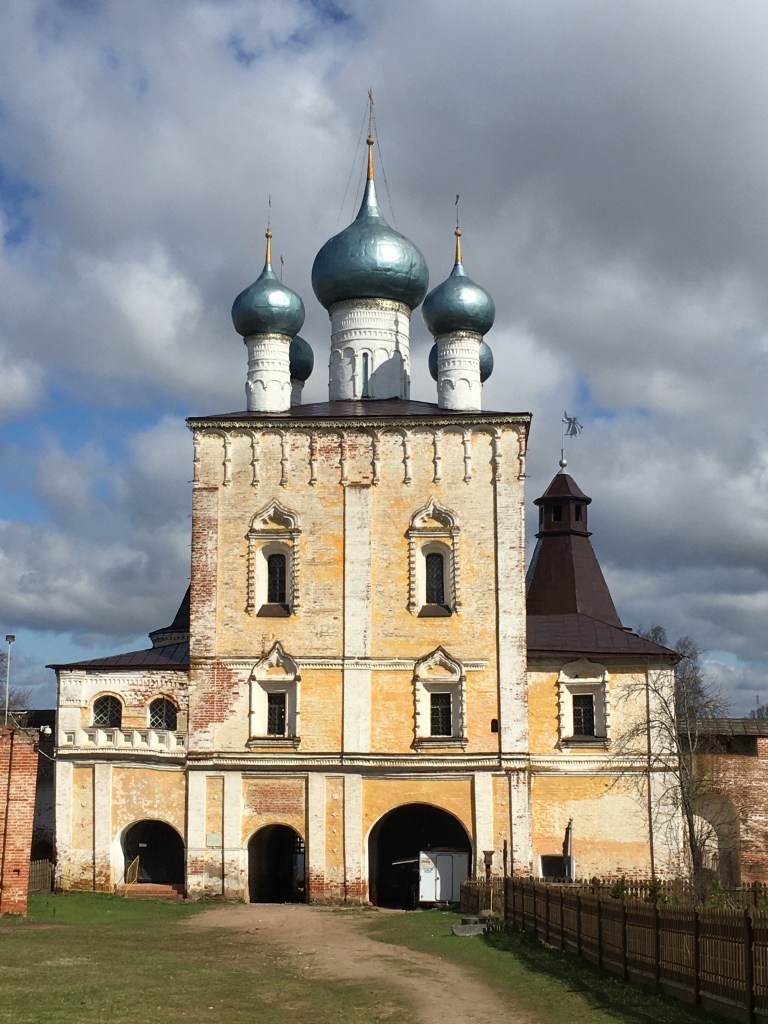
After a quick stop for some photos and a brief wander it was back in the car heading towards Uglich on the banks of the Volga.
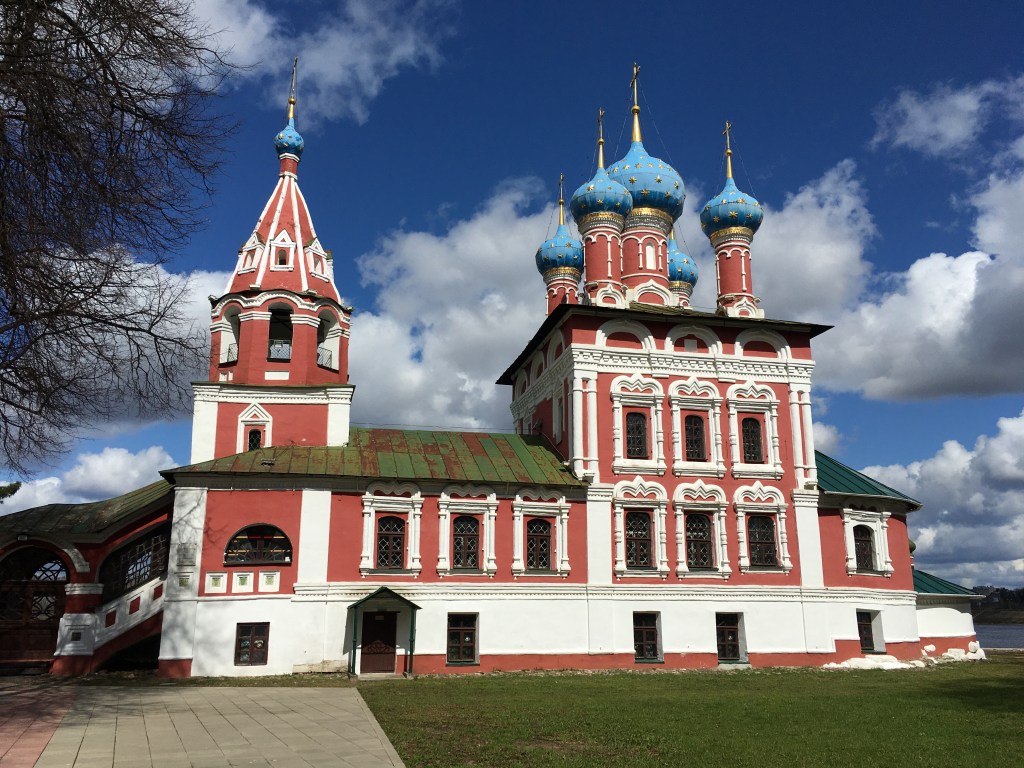
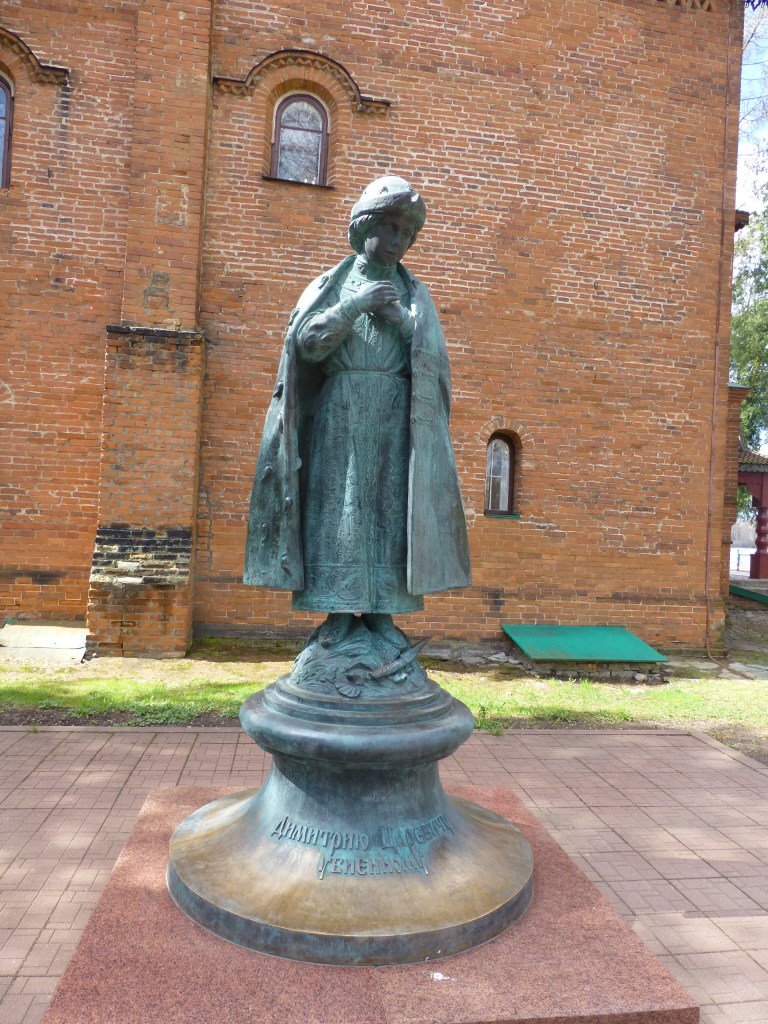
Uglich is “the scene of an unsolved crime that changed Russian history. In 1591, 8 year old Prince Dmitry, the youngest son of Ivan the Terrible, died in rather suspicious circumstances. The official report was that he fell on a knife during an epileptic fit; many believe, however, that he was killed on the orders of his guardian, Boris Godunov, who then became Tsar!” (Lonely Planet).
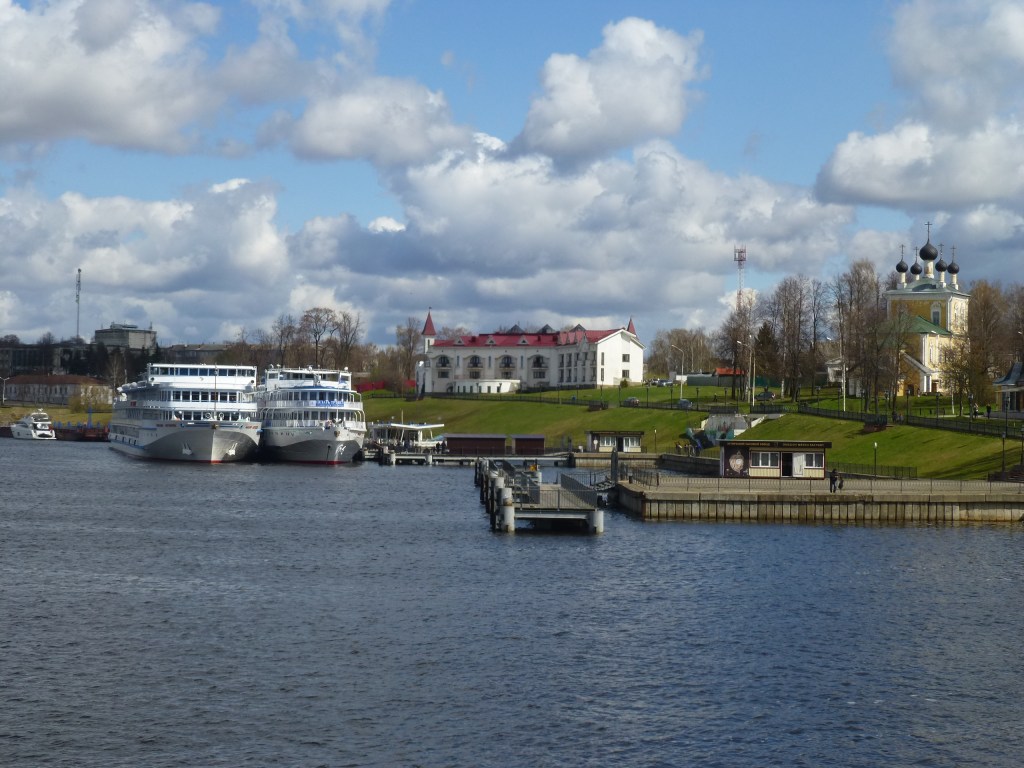
Uglich has a rather nice feel to it with a pleasant park on the banks of an inlet from the Volga and a great market where we bought a small oil painting of a wooden hut with cow parsley growing in front, and a carved wooden blue and white Grandfather Frost and his daughter the Snow maiden. The main attraction of course is the attractive Kremlin marking the place where young Dmitry lived and died. With some difficulty, because everything seemed to be closed, we found a nice little restaurant for a lunch of excellent soup and bread. Having spent a couple of hours in the town it was time to return to the road towards our next destination of Rybinsk.
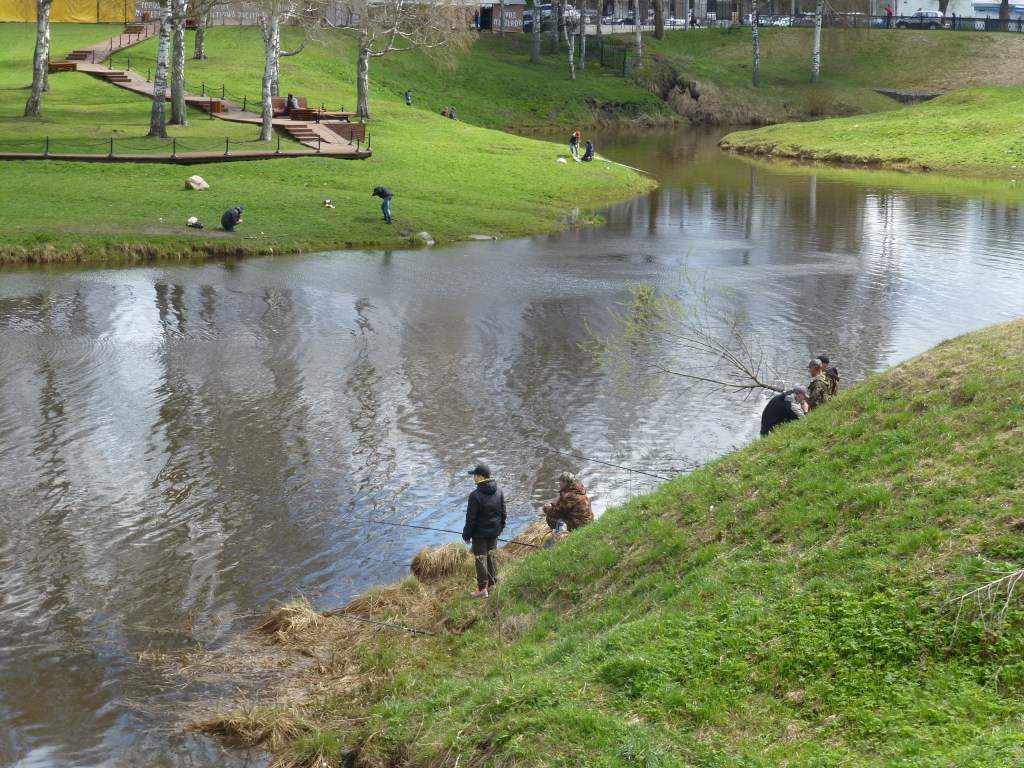
So I have mentioned that word ‘Road’ again. The road between Rostov and Uglich was bad – large sections of patchwork pot holes alternating with unevenly filled potholes, but the road out of Uglich was shockingly bad. There were so many holes that they were unavoidable and the traffic crawled along trying to protect their suspensions and bodywork as best they could and even though we were in a Landrover which is made for off-road terrain we had to go slowly to avoid the worst of the holes. We stopped along the way to view the town of Myshkin from across the river. Our guide book had urged us to go there but sadly we just didn’t have time. After that the road became a lot better and our progress was faster – and safer.
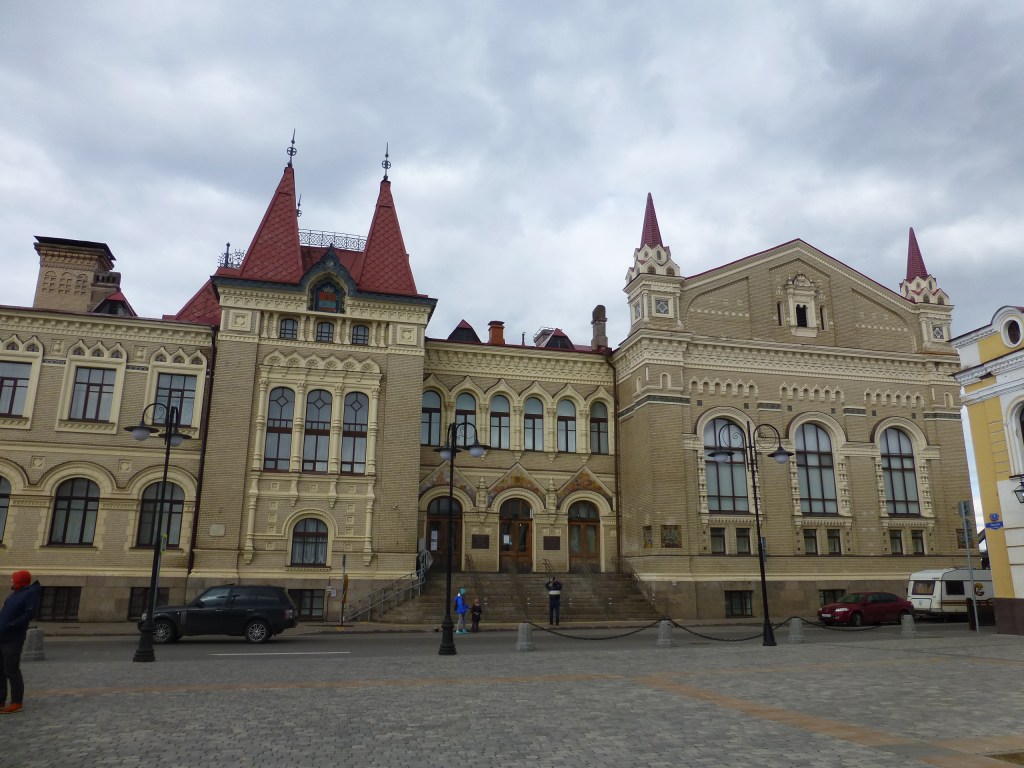
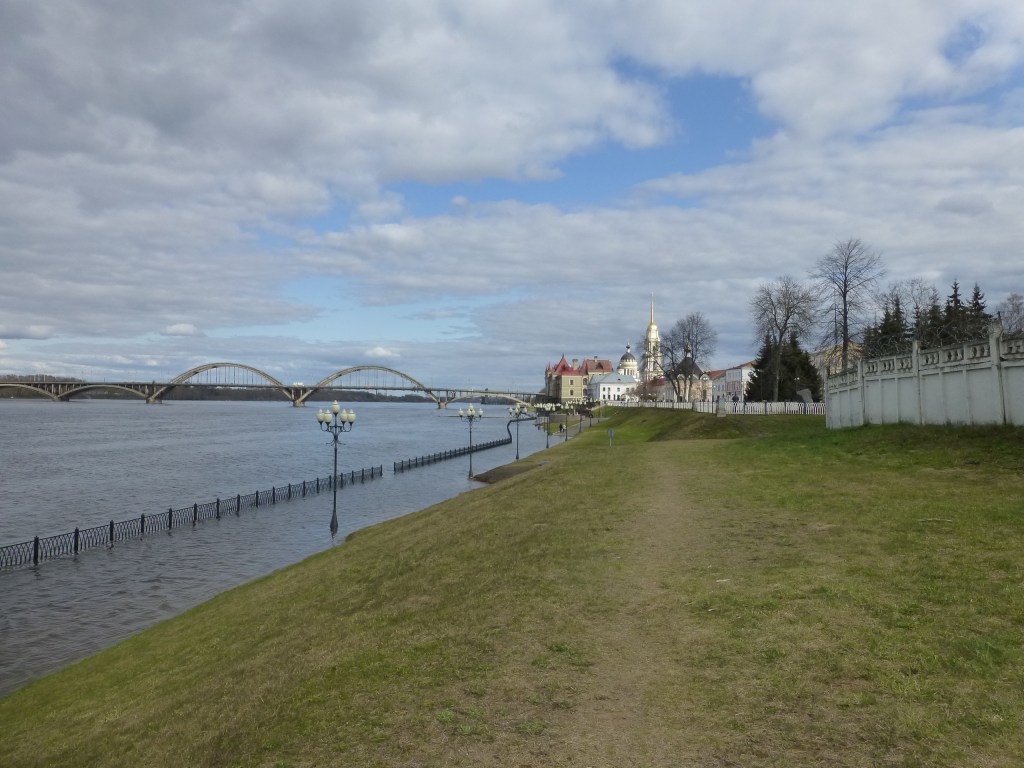
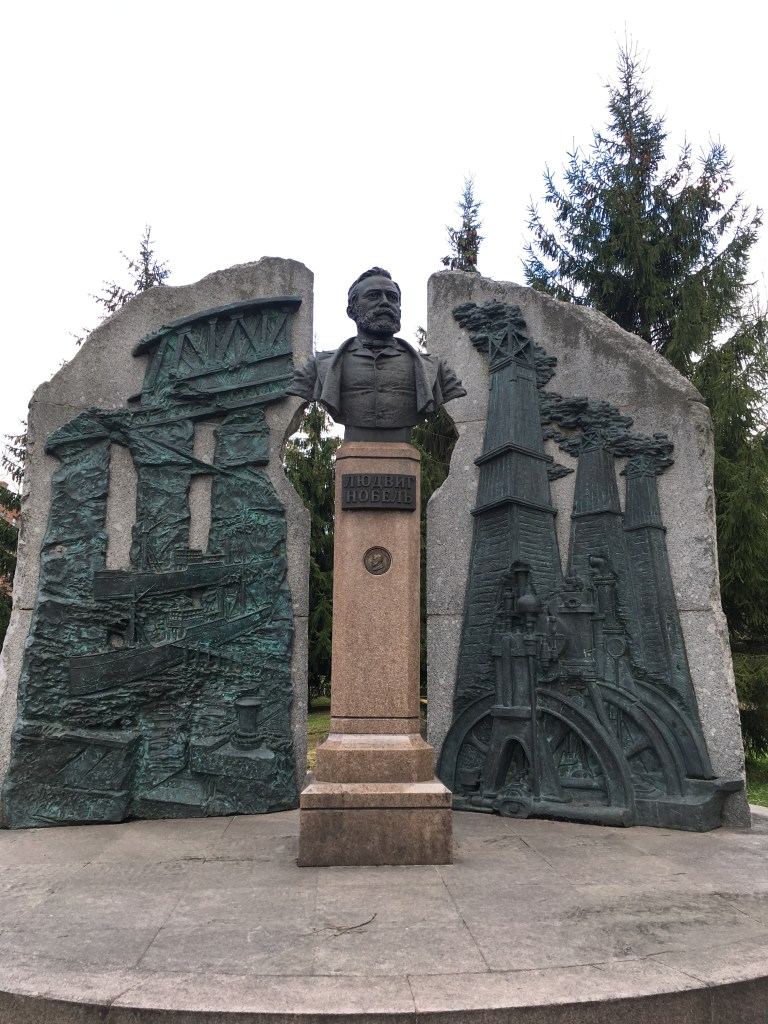
Rybinsk is much more of a city than any of the other places we had been too in the region and for me, the least favourite, though it does have several things of note in it. Like Uglich, it is on the Volga river, which had over-flowed its banks here due, in part, to the amount of heavy rain we had recently had. There is something quite surreal about seeing a park bench stranded in the middle of the water. It has a magnificent New Bread Exchange built in 1912 which is now a museum and monuments to several people including Admiral and Saint Feodor Ushakov, a contemporary of Nelson who, as an Admiral, won every engagement he took part in. My husband is a fan! And there is also a monument to Ludvig Nobel brother of Alfred (founder of the Nobel prize) who, to my surprise, had a large factory here.
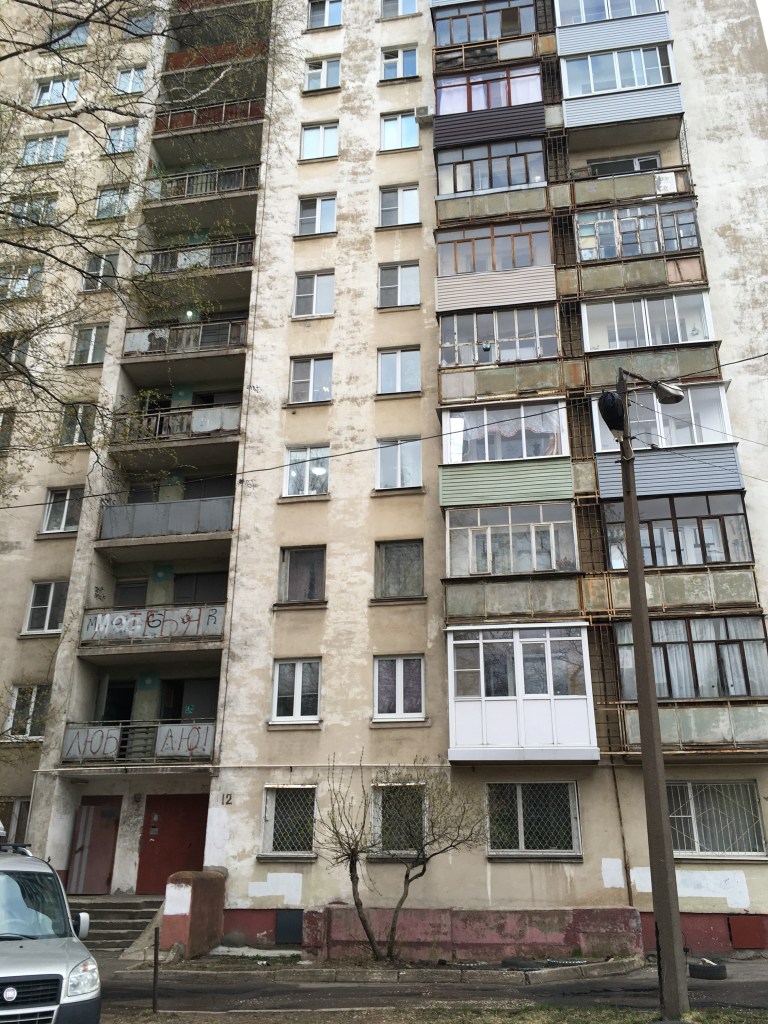
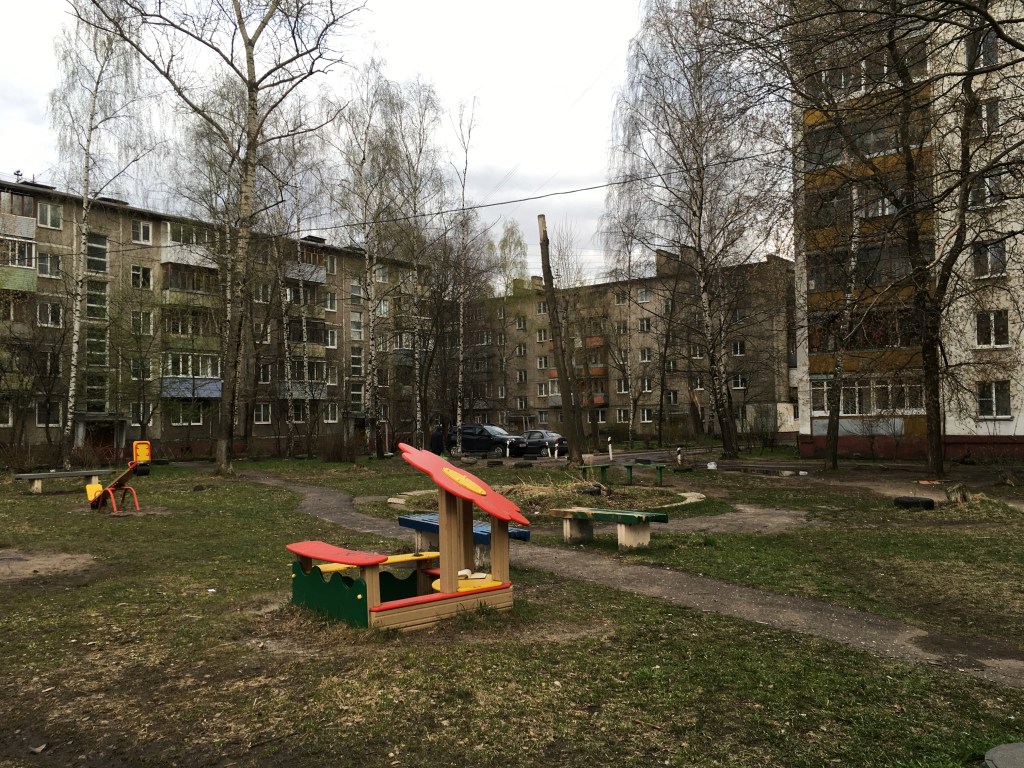
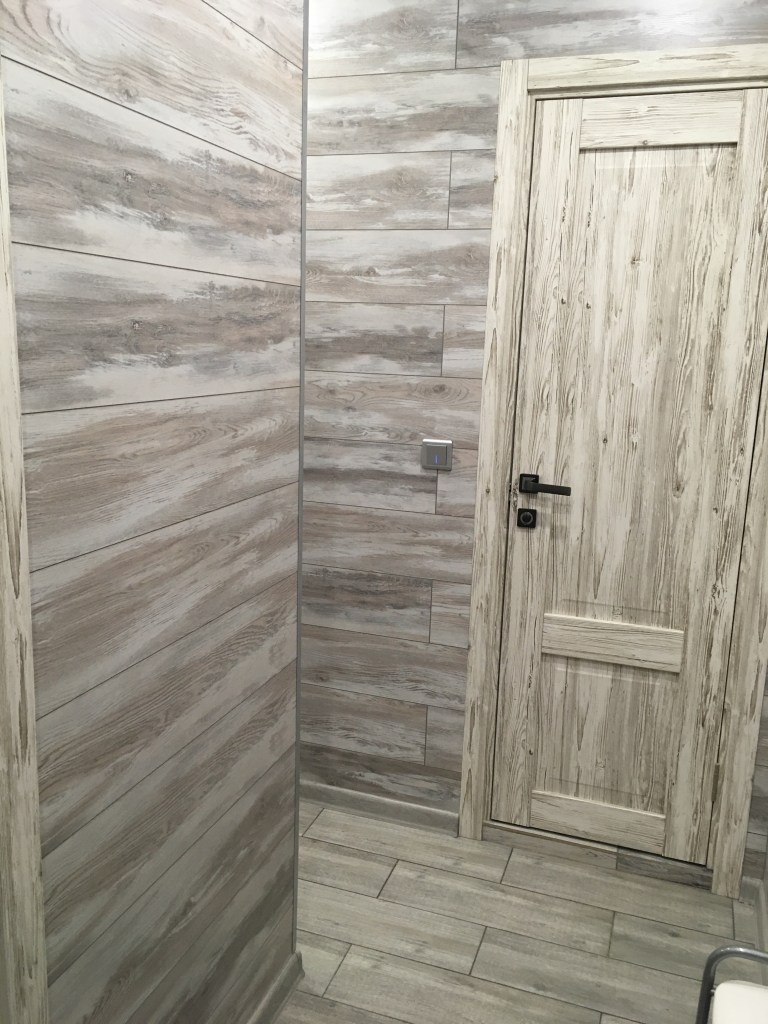
After what seemed a far too brief a visit we were back in the car heading toward Yaroslavl where we planned to stay a couple of nights. Because it was the Easter weekend almost everything was booked or really, really expensive so we were lucky to find an apartment about 3km from the centre through Booking.com. We got really nervous when our sat nav took us into a very soviet housing complex of several high rises and even more nervous when we realised that the missing tarmac from some of the roads we had encountered during the journey was nothing compared to the craters in the ‘roads’ here! As I mentioned earlier we were driving a Landrover but I seriously have no idea how regular cars coped with the size of the holes. The young couple who owned the flat met us outside and took us up in a lift meant for two it was so tiny. The communal area was very tatty and gloomy but on opening the door to their apartment there was a whole other world! The flat was clean and very modern, having just been refurbished a year ago. It was a little weirdly completely done out in wood effect laminate on both the floors and the walls so it was hard to see where the floors and walls met!! But it was clean, warm, comfortable and well equipped in the small kitchen. And the owners were friendly and very helpful. Don’t be put off by the outside – I would definitely recommend it.
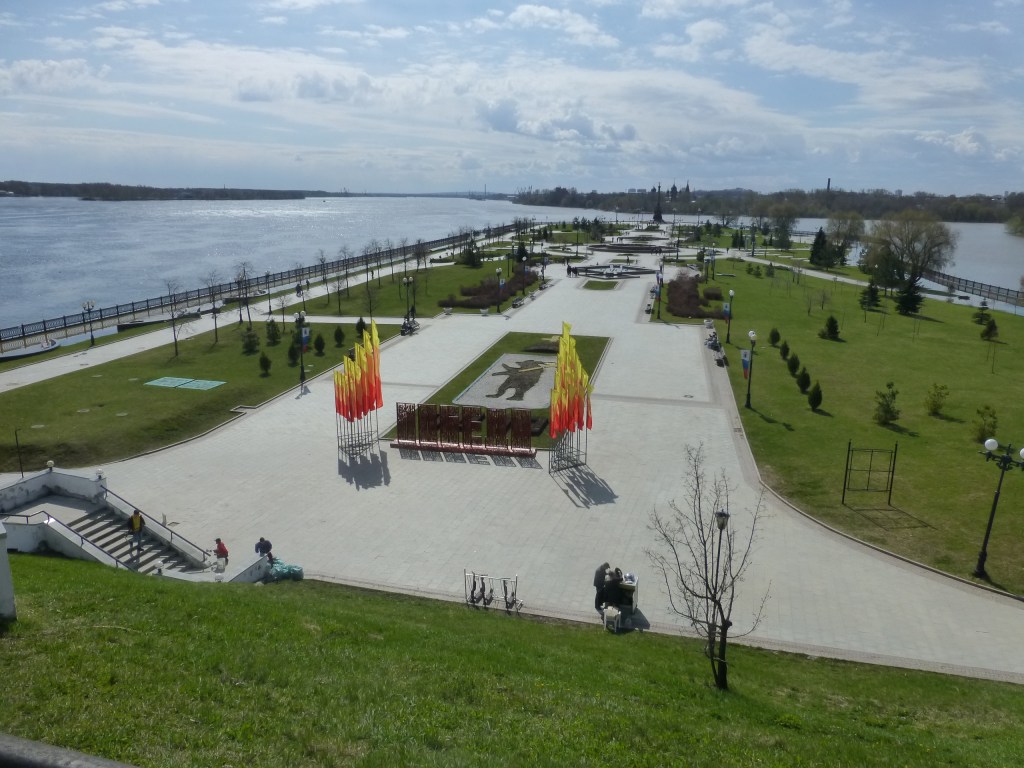
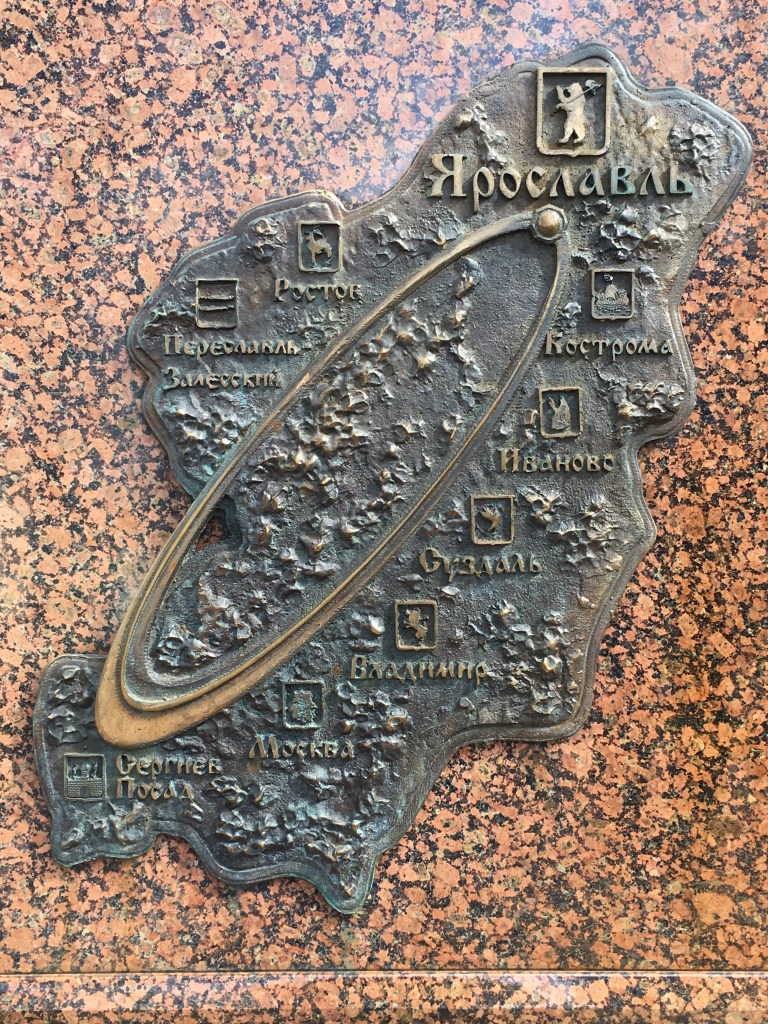
Yaroslavl is a big city on the confluence of the mighty Volga River and the smaller Kotorosl river which starts near Rostov where we too started this leg of our trip if you remember. Yaroslavl is regarded as the starting point on the Golden Ring circuit and was founded in 1010 by Yaroslav the Wise (I do hope you remember your dynastic family tree from Golden Ring Part 1!). Its motive is a bear which can be seen everywhere. The city began its life where the two rivers meet in an area called Strelka. Today there is a large formal park there; a great place to stroll and take photos. Like Rybinsk the area around the edge of the park was underwater.
The Golden Ring 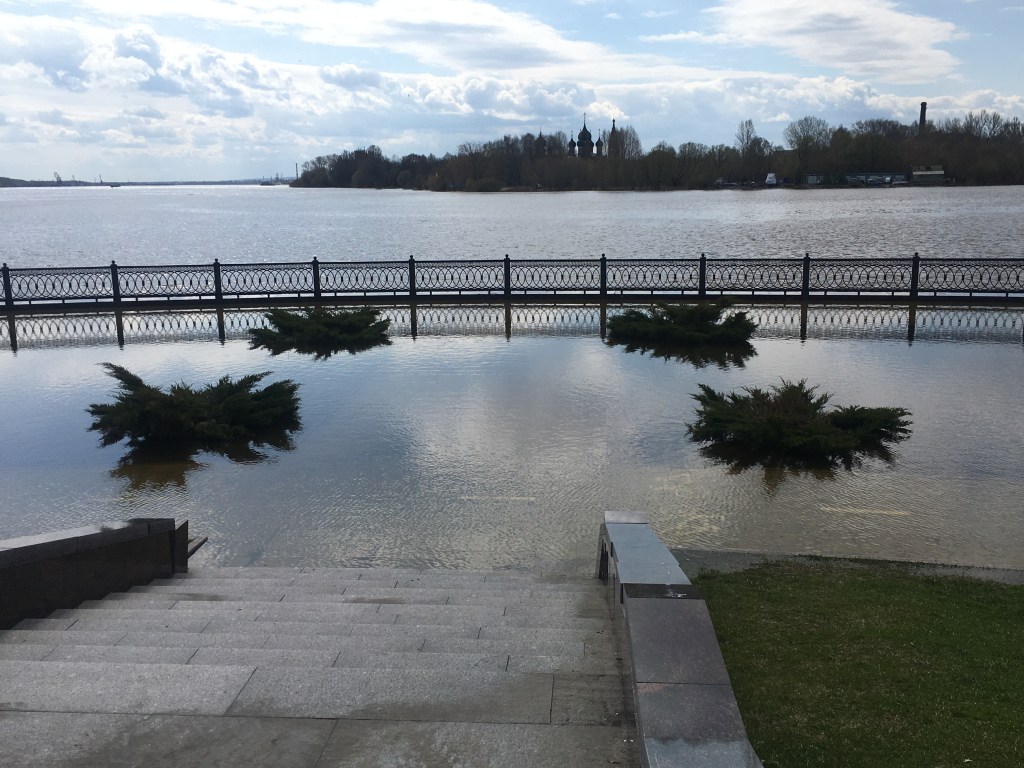
Flooding
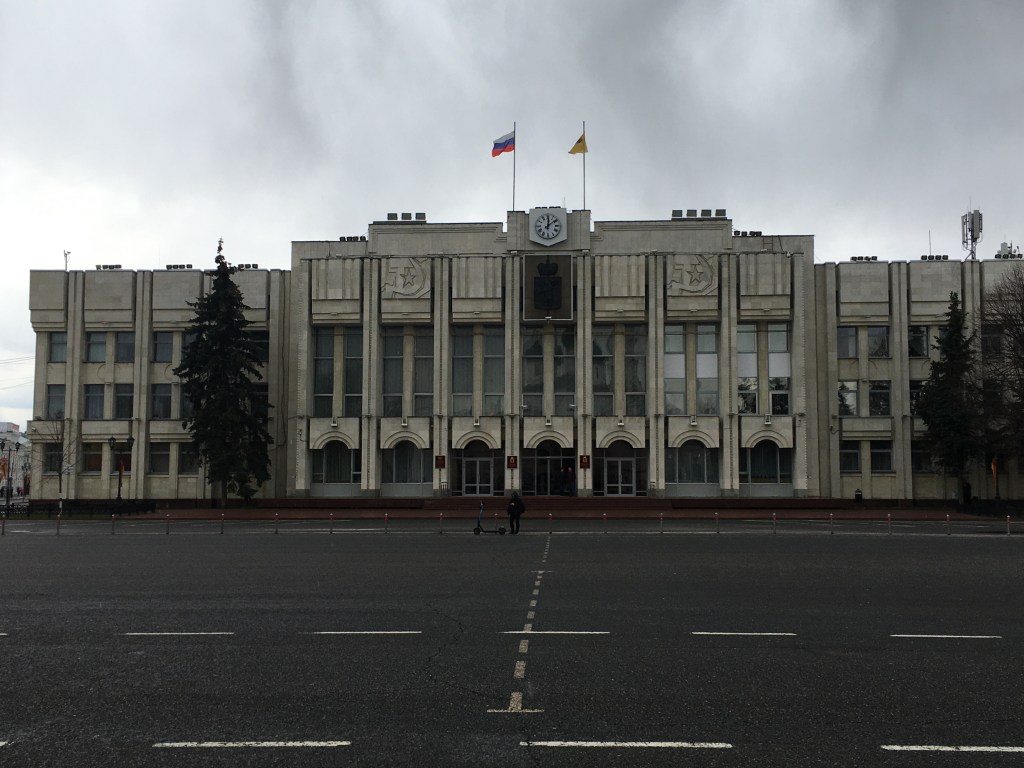
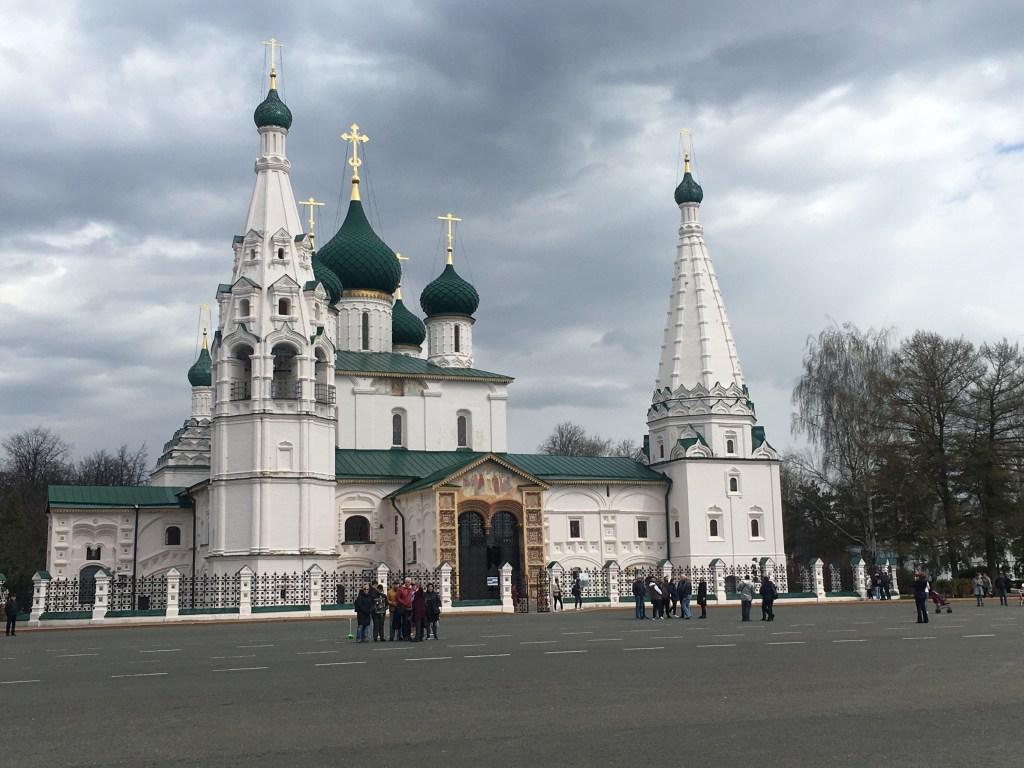
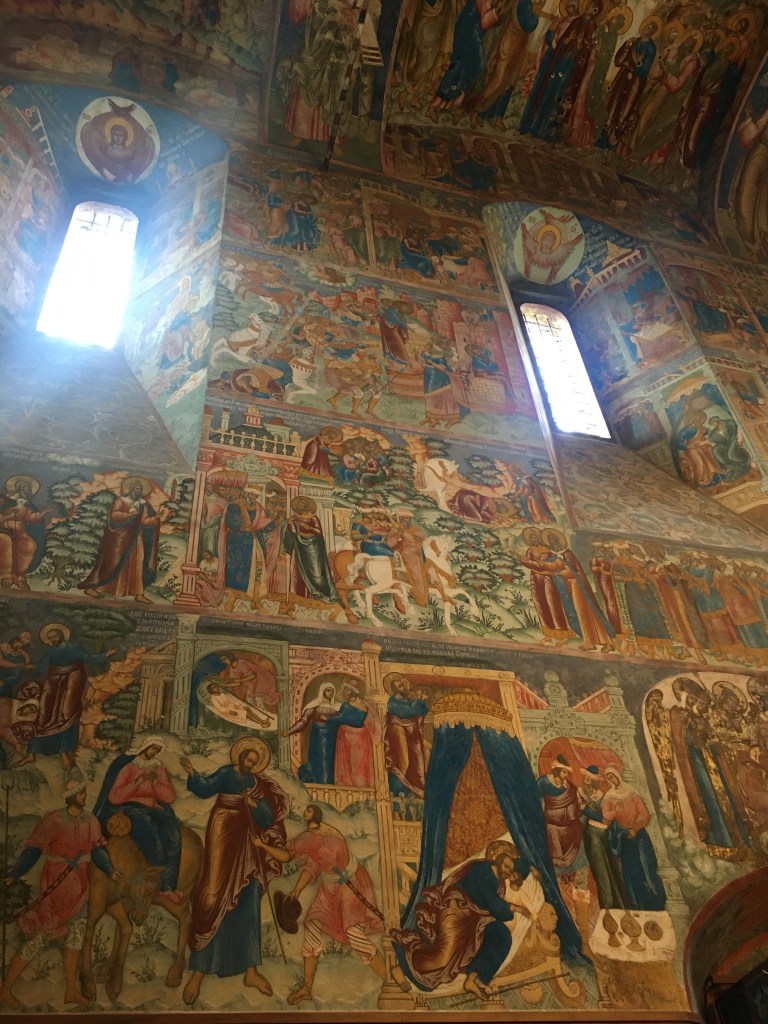
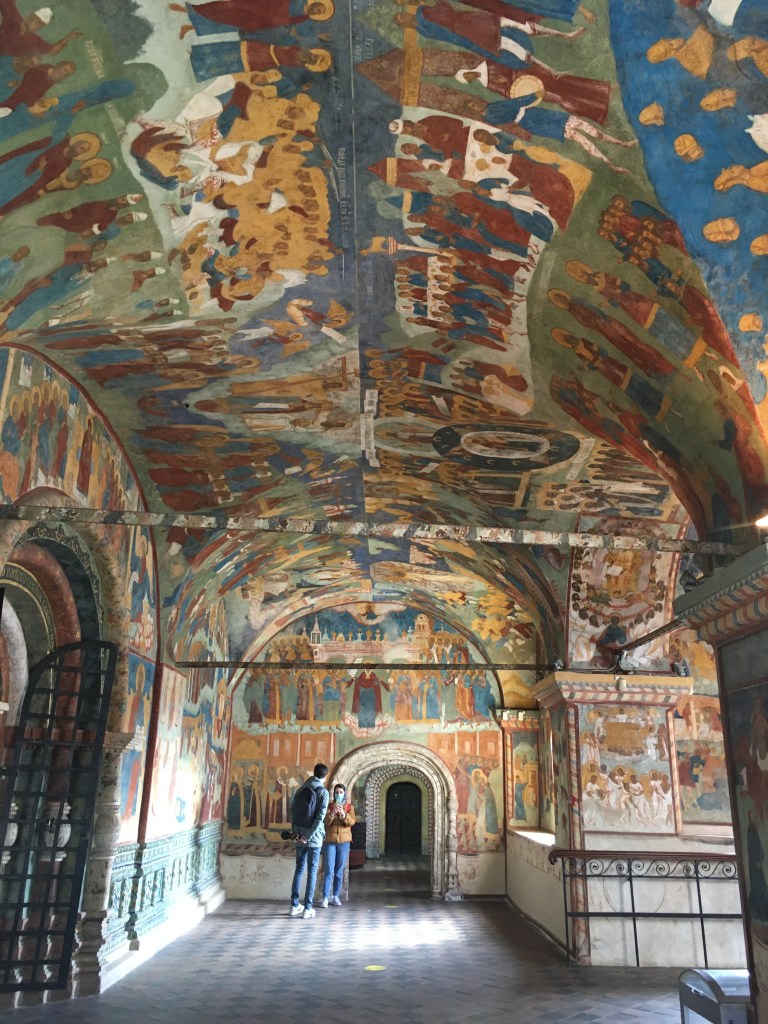
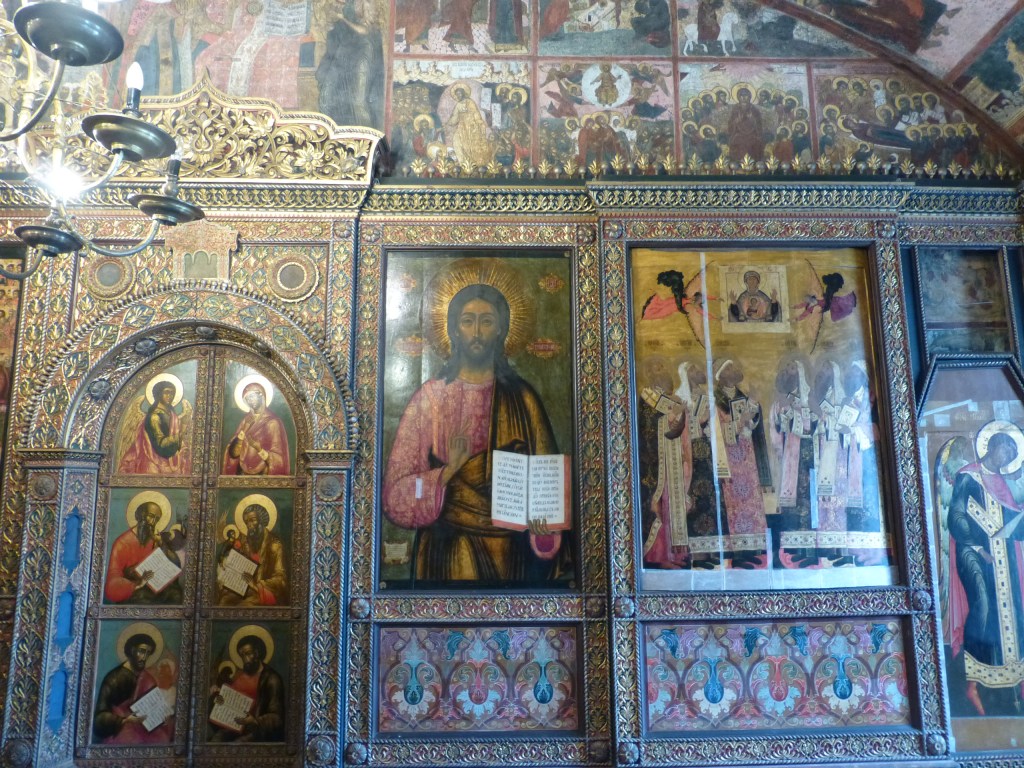
Unlike the other Golden Ring towns Yaroslavl does not have a Kremlin but it does have a fabulous Unesco listed fortified monastery founded in the 12th century. You can get a great view of the city and its rivers from the top of it’s bell tower. There are so many churches, buildings and museums of note that I am not going to list them all but I will give a special mention to the Church of Elijah the Prophet. This beautiful church built in 1650 stands, rather incongruously, in the middle of the completely paved Sovetskaya plaza and directly opposite the very Soviet town hall with it’s hammer and sickle motives. Inside the church are some of the Golden Ring’s brightest frescos. But be warned the church is apparently closed on rainy days to protect the frescos from moisture.
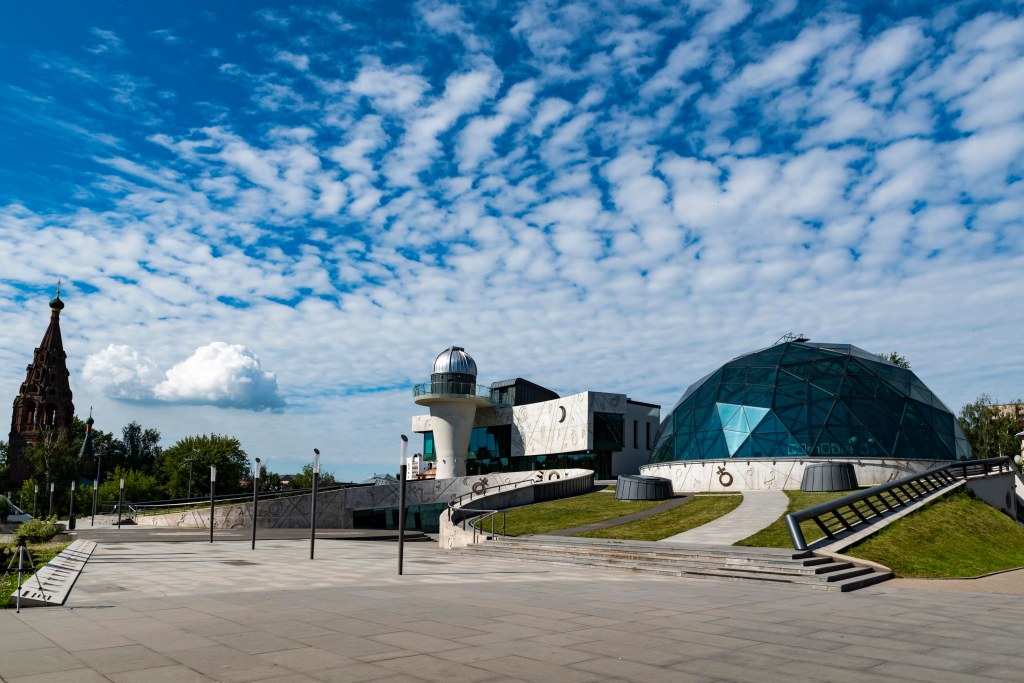
I would also like to give a mention to one of the towns more modern day famous inhabitants. Valentina Tereshkova – the first woman in space! We all know that Russia had the first man in space – Yury Gagarin but I for one did not realise that they also had the first female cosmonaut. Known as ‘Chaika’ (Seagull) she spent 3 days orbiting Earth in June 1963. She was 26 years old and remains the only woman to have flown solo in space. She is still alive and involved in national politics.
We have two more towns to visit on the Golden Ring, so keep an eye out for Part 4 at some point in the future!

 Russian Reflections
One thought on “Golden Ring Part 3: Rostov to Yaroslavl via Uglich and Rybinsk”