

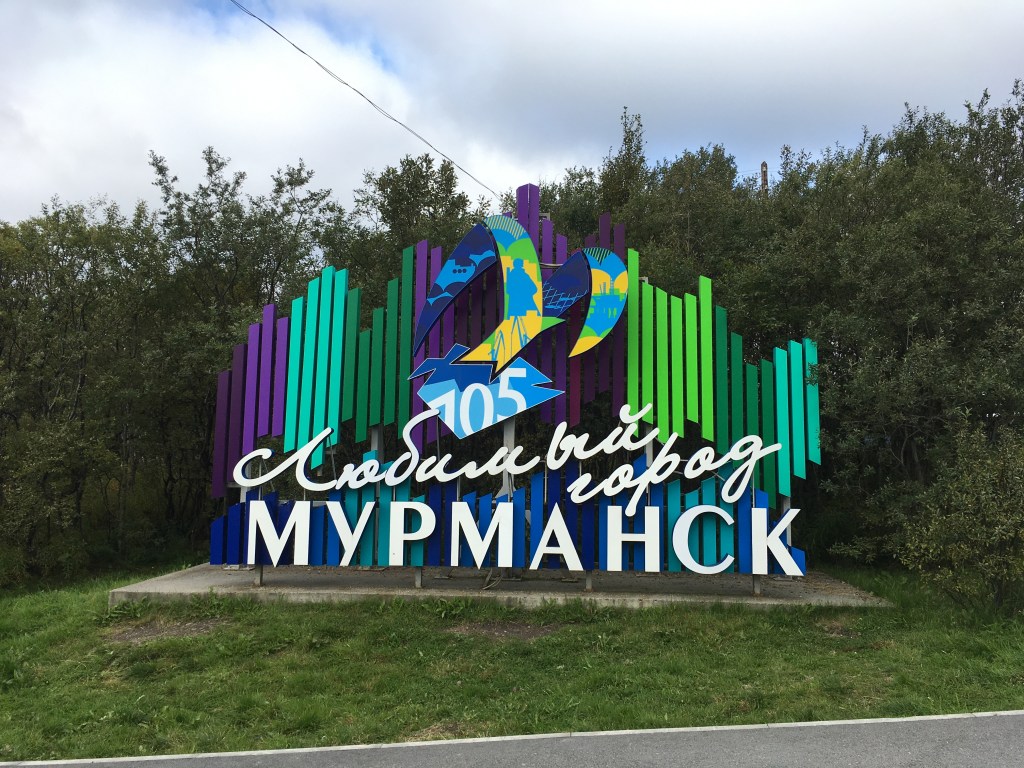
When my husband said he was going to a two day conference in Murmansk I seized the chance to go with him. “But what will you do all day” he asked? I assured him that I would be quite happy walking around the town and visiting museums on my own – i’m a big girl now. I was so excited to be going north of the Arctic circle and, whilst I would love to go there in the middle of winter, I was quite happy to find that the weather was going to be a balmy +8C and most importantly dry.
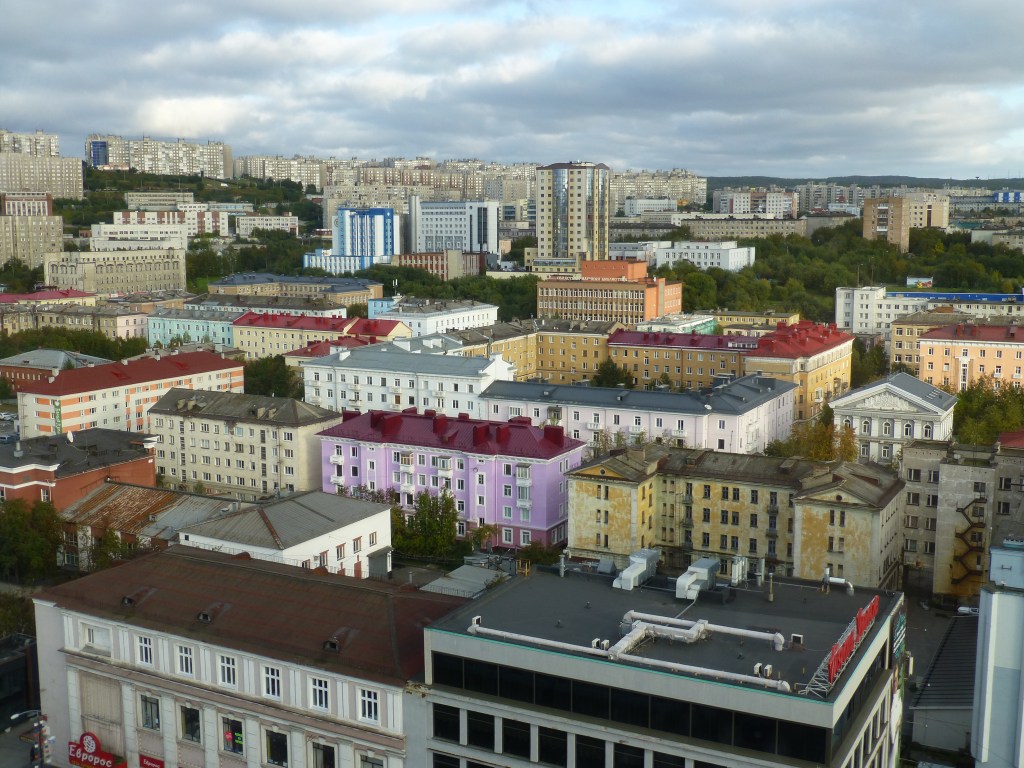
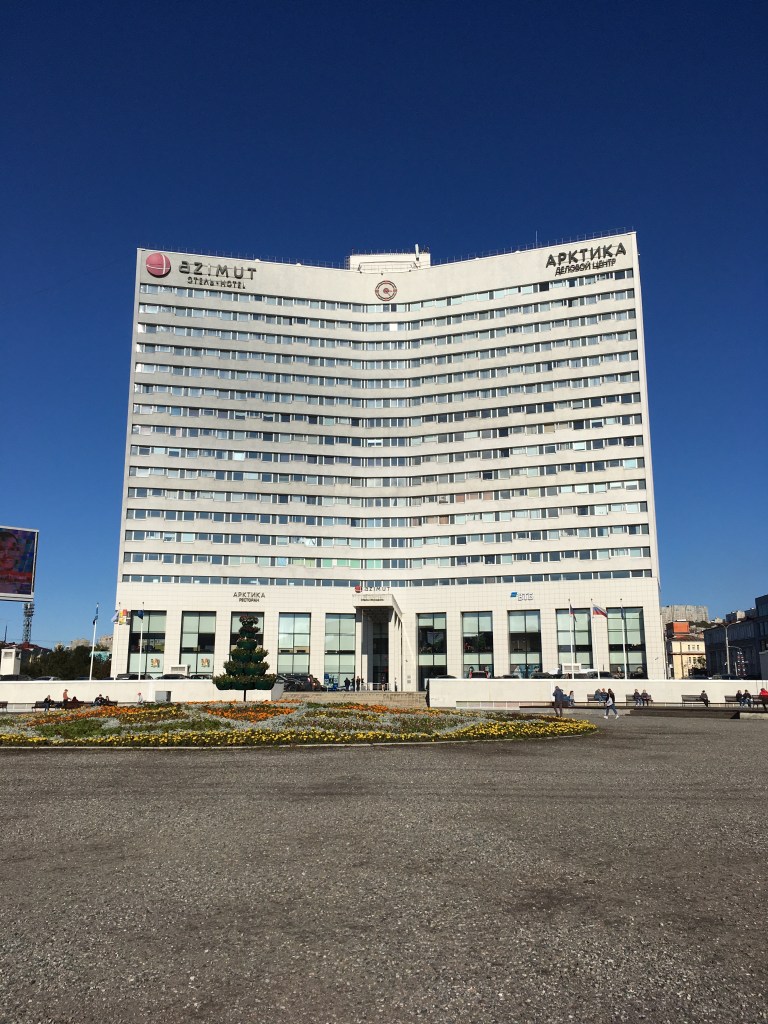
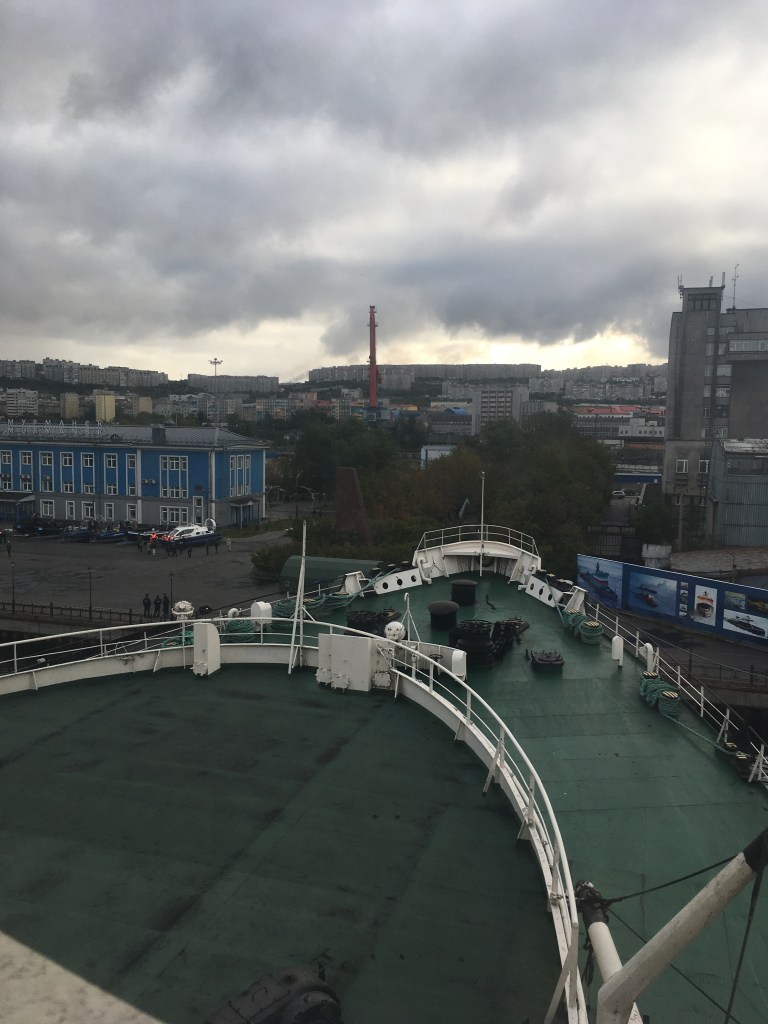
When we arrived, my first impression was of a very grey Soviet town. The next morning as I walked around my second impression was also of a very grey Soviet town!! Murmansk is one of 12 Hero Cities in Russia due to its resistance during WWII. The town was heavily bombed during the war and since it was largely made of wood it was devastated with only the stone chimneys surviving, as shown by this picture from the local museum.
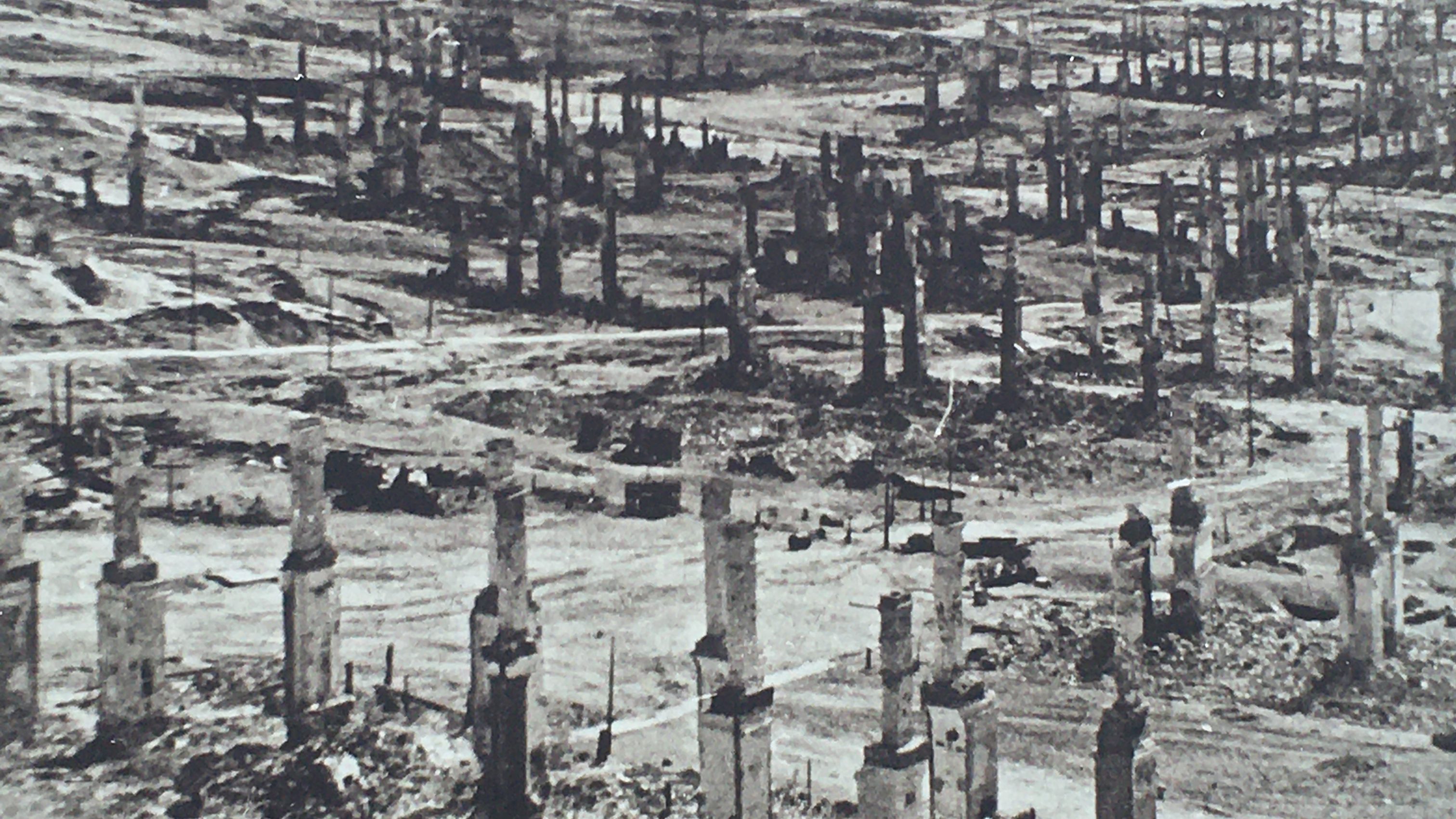
Murmansk after the War
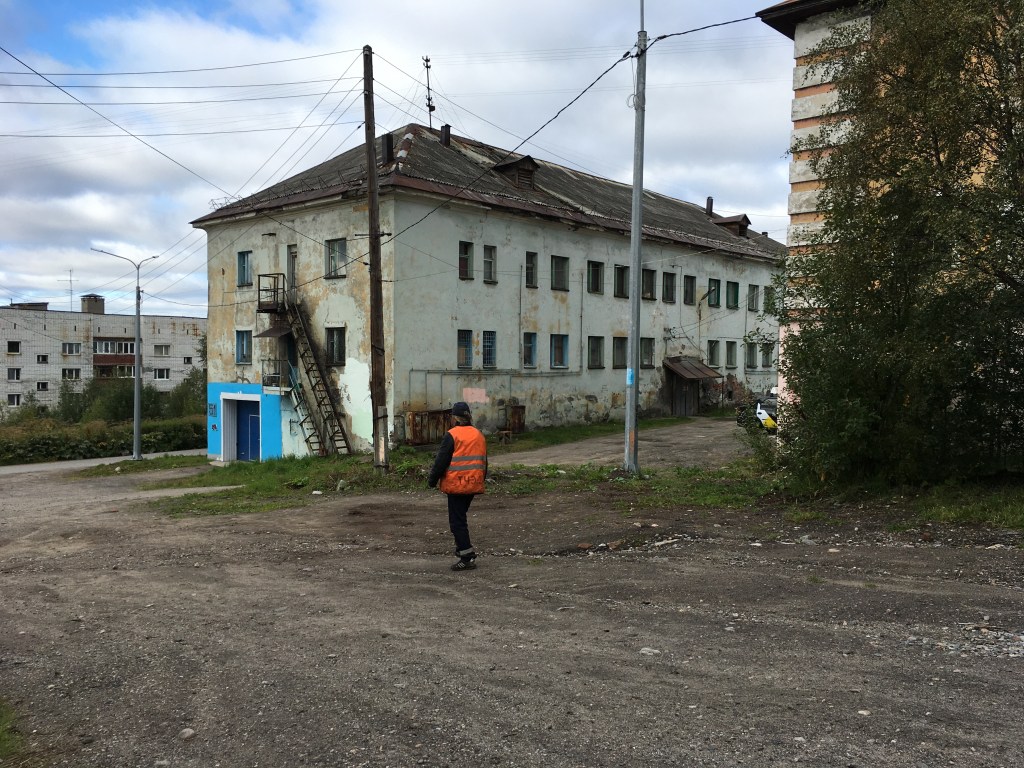
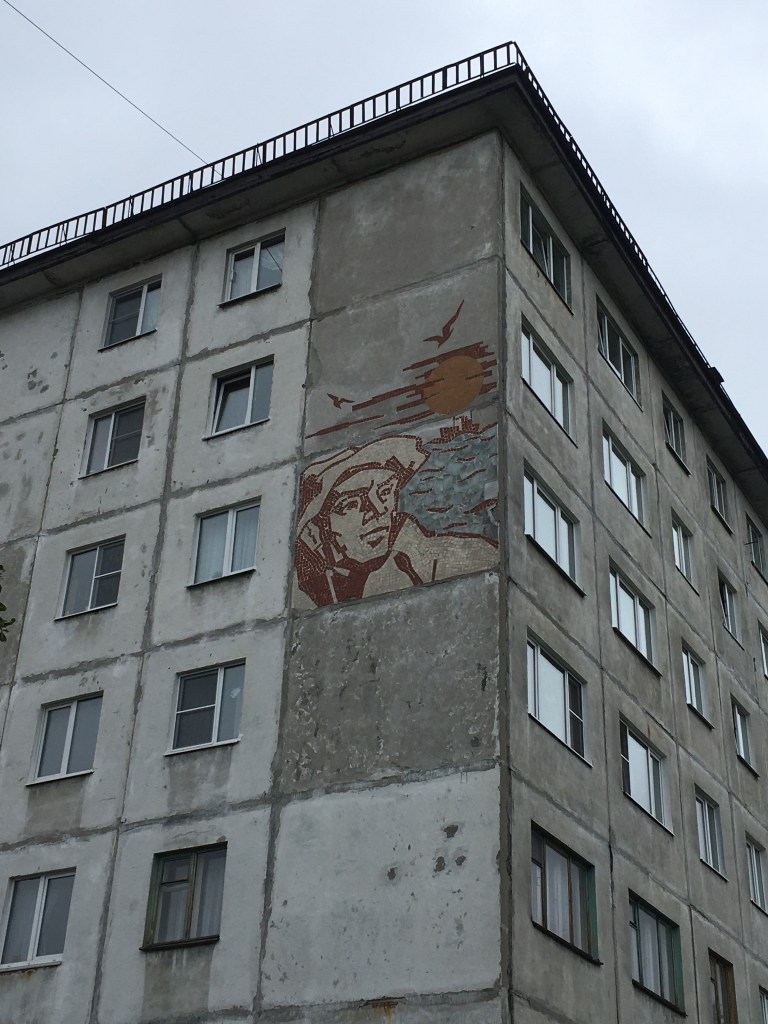
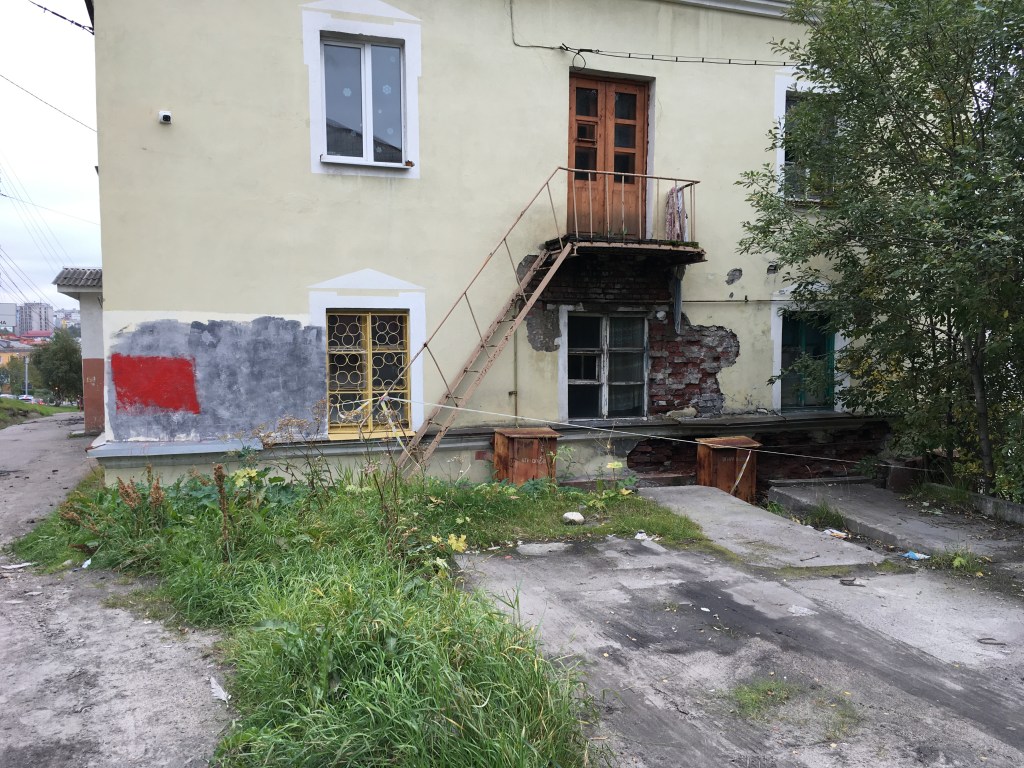
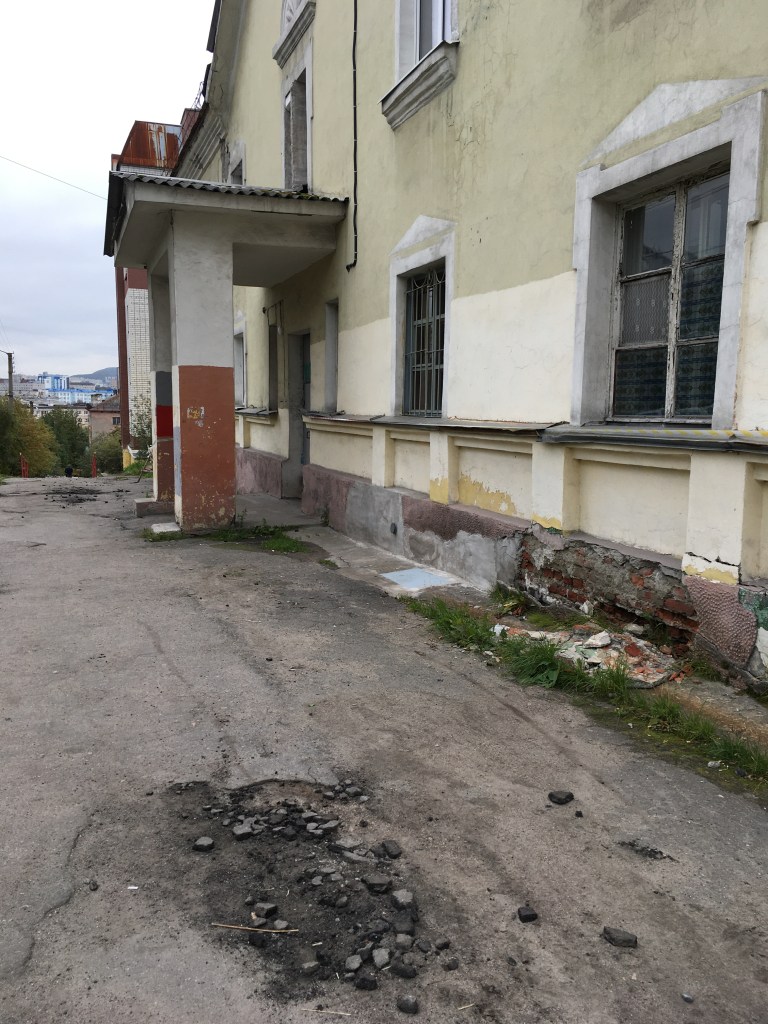
This meant that the town was rebuilt in the 50s, 60s and 70s when concrete reigned supreme and where row upon row of high-rise apartment blocks were considered the best, and fastest, way to build enough accommodation quickly (it still is judging from all the new high-rises going up outside Moscow). Unfortunately now the concrete is crumbling and wherever you look bits of plaster are falling off the buildings and the concrete steps up the hills are falling to pieces with make-shift repairs.
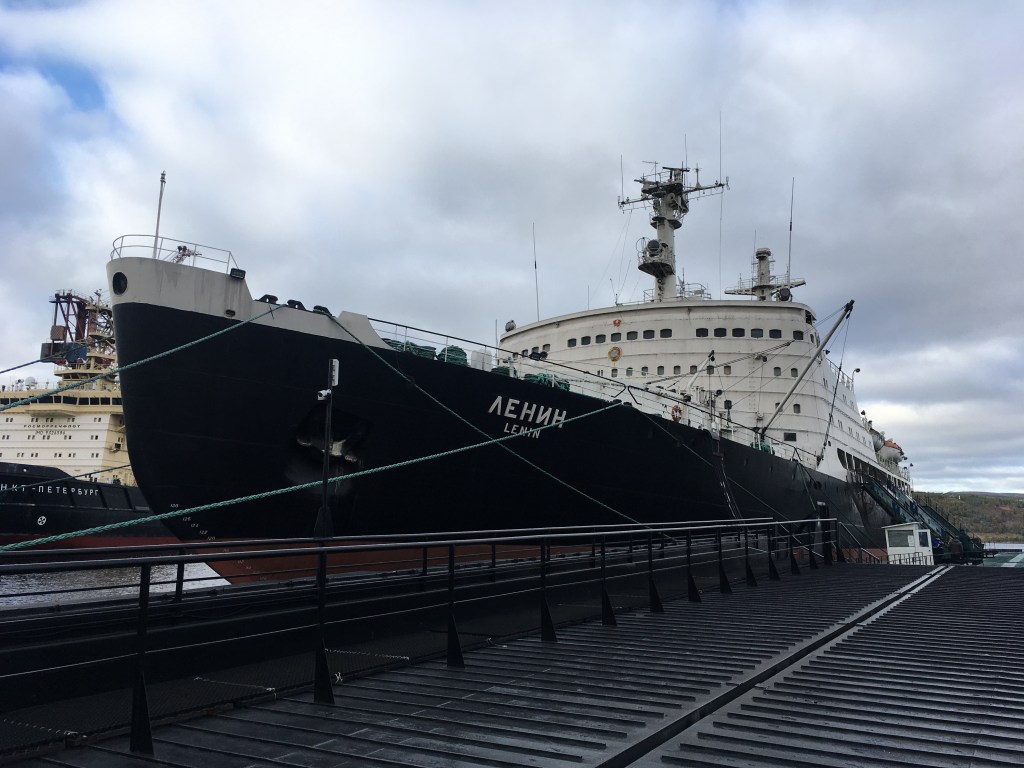
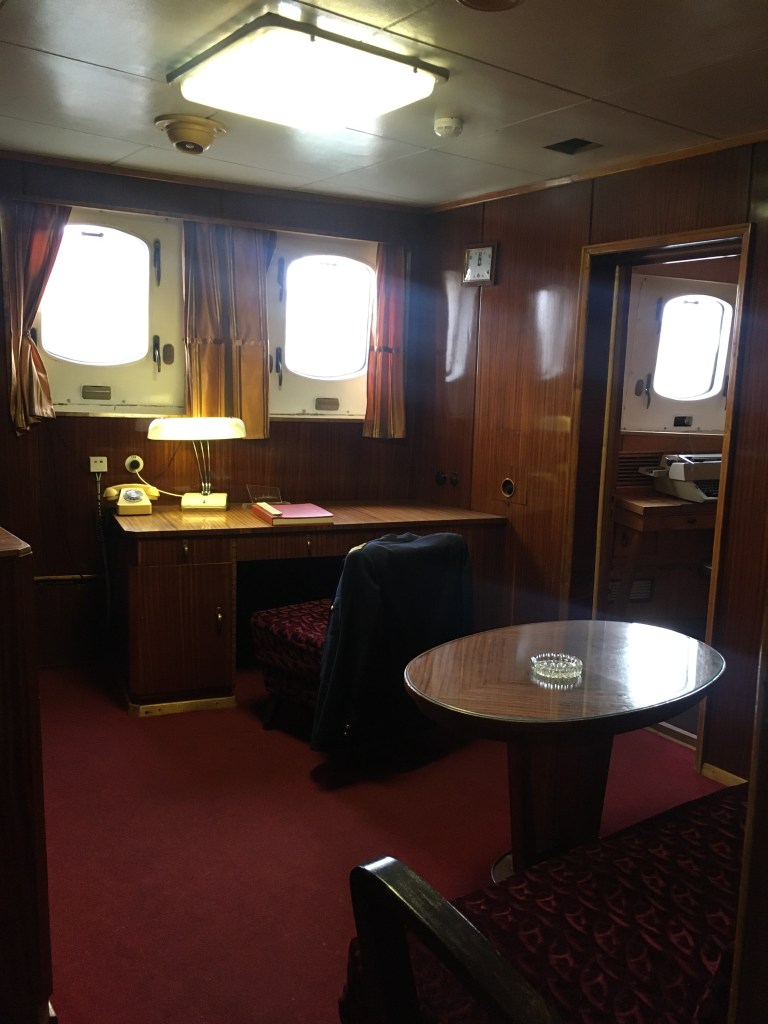
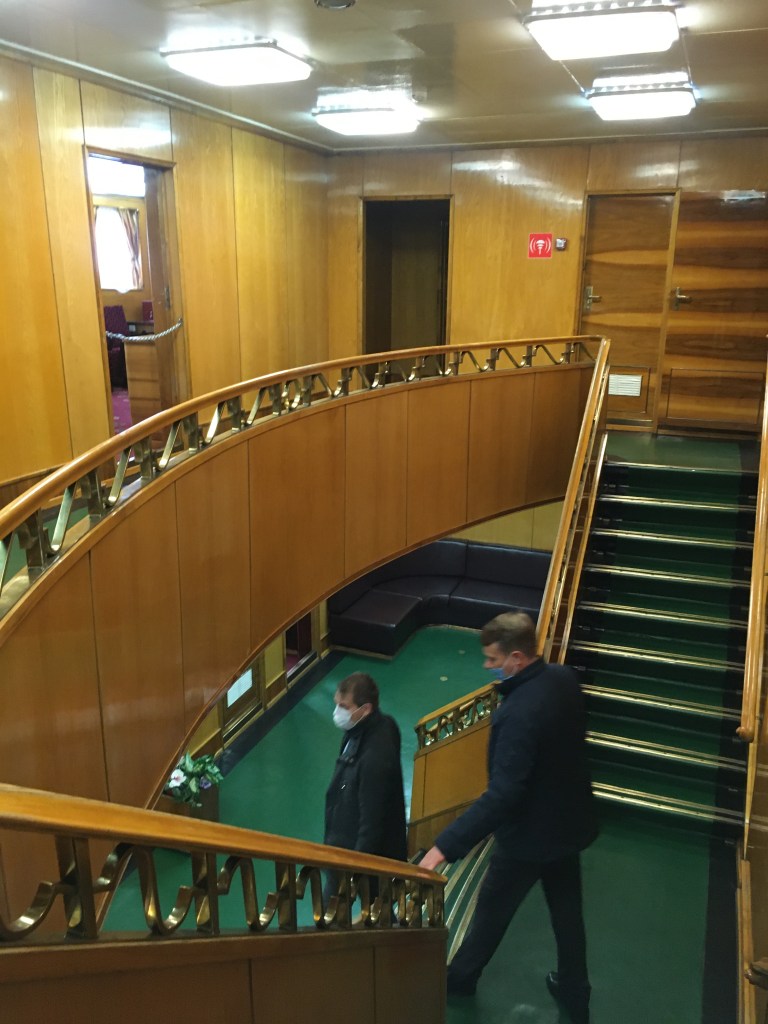
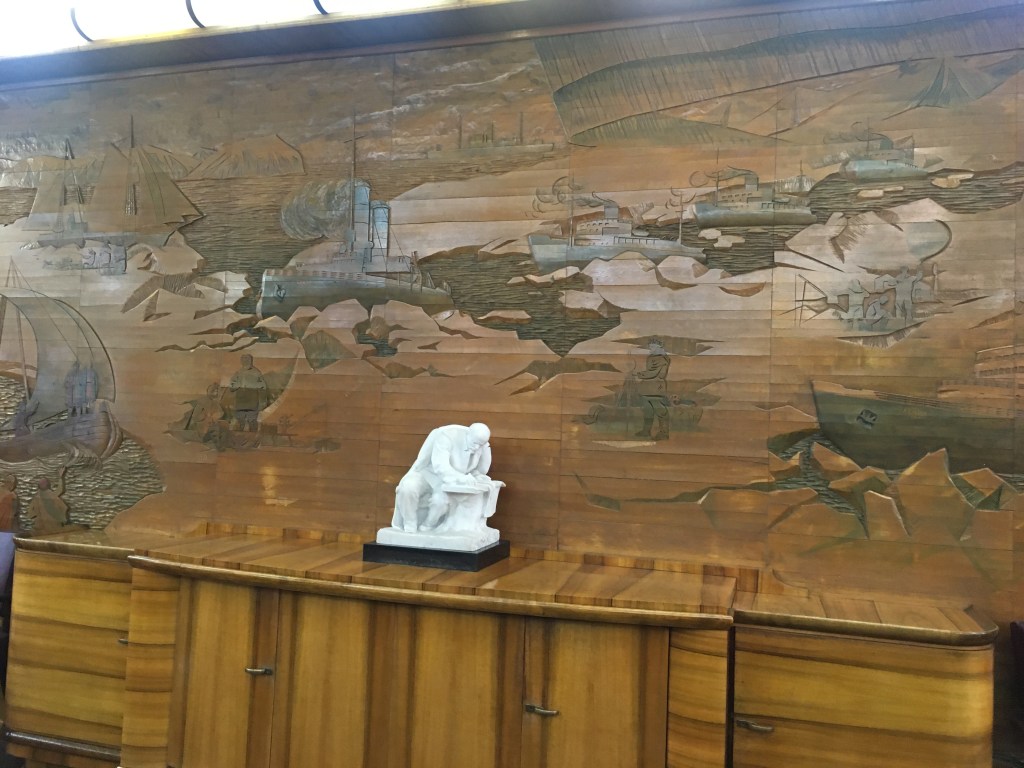
Now it turns out that there is very little to do and see in Murmansk and one of the main highlights – the world’s first nuclear powered ice-breaker ‘Lenin’ – was closed due to COVID. Fortunately the delegates from my husband’s conference were being given a tour of ‘Lenin’ so I cleverly blagged myself a badge and joined them! It is large and luxurious with the grandeur of a bygone age, lots of brass and highly polished wood. It apparently also had a swimming pool on board (indoor I hope!) but sadly we didn’t see that. After the tour I left the delegates to it and set off to see the other main attraction.
Alyosha is a gigantic concrete soldier erected to commemorate the Arctic fighters who died in WWII. He stands high on a hill overlooking the Kola inlet with superb views of the docks, the inlet and the moors beyond. It is about a 45 minute walk from the centre of town (though you can get a bus most of the way) with the last part on a path through the moorland. The moor was looking wonderful. It is autumn in Murmansk and the leaves of the small low lying berry bushes (blueberries, myrtle and lingonberries) had all turned a wonderful shade of red. On the other side of the inlet one could see all birch trees turning yellow and orange.
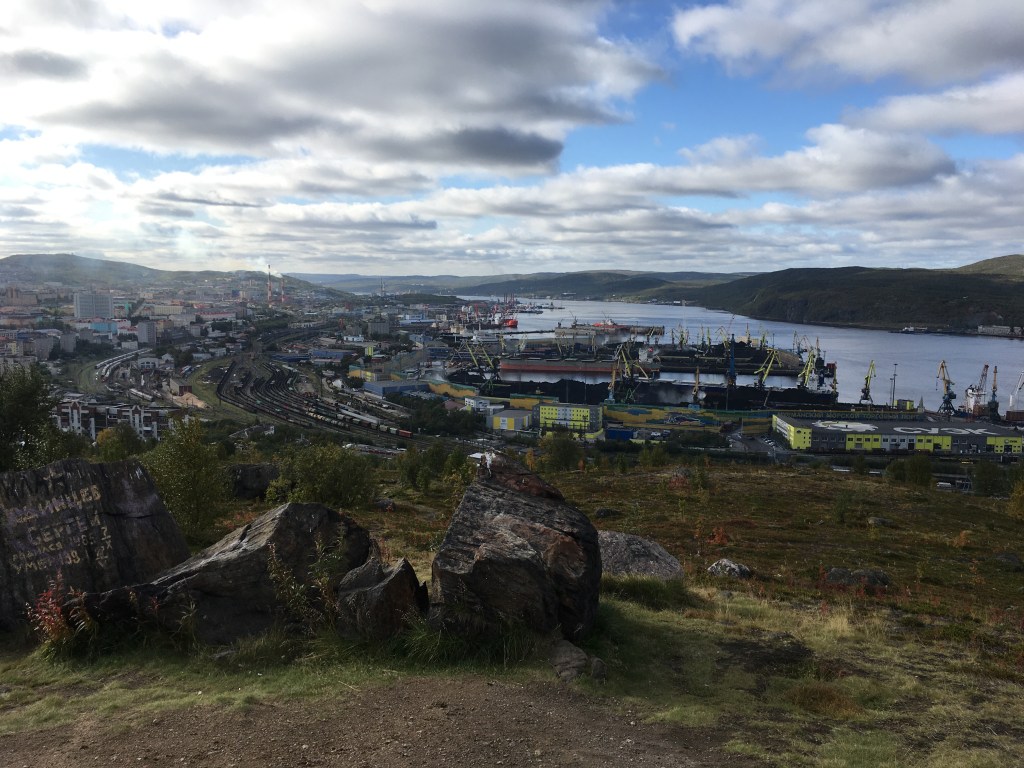
The Port 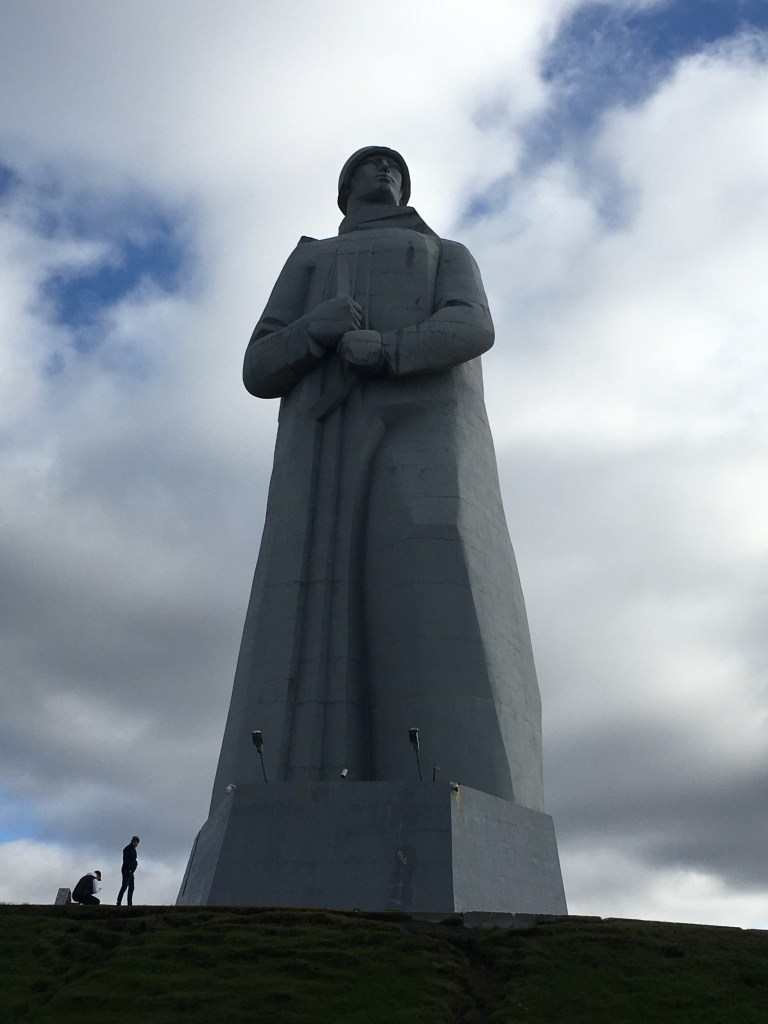
Alyosha 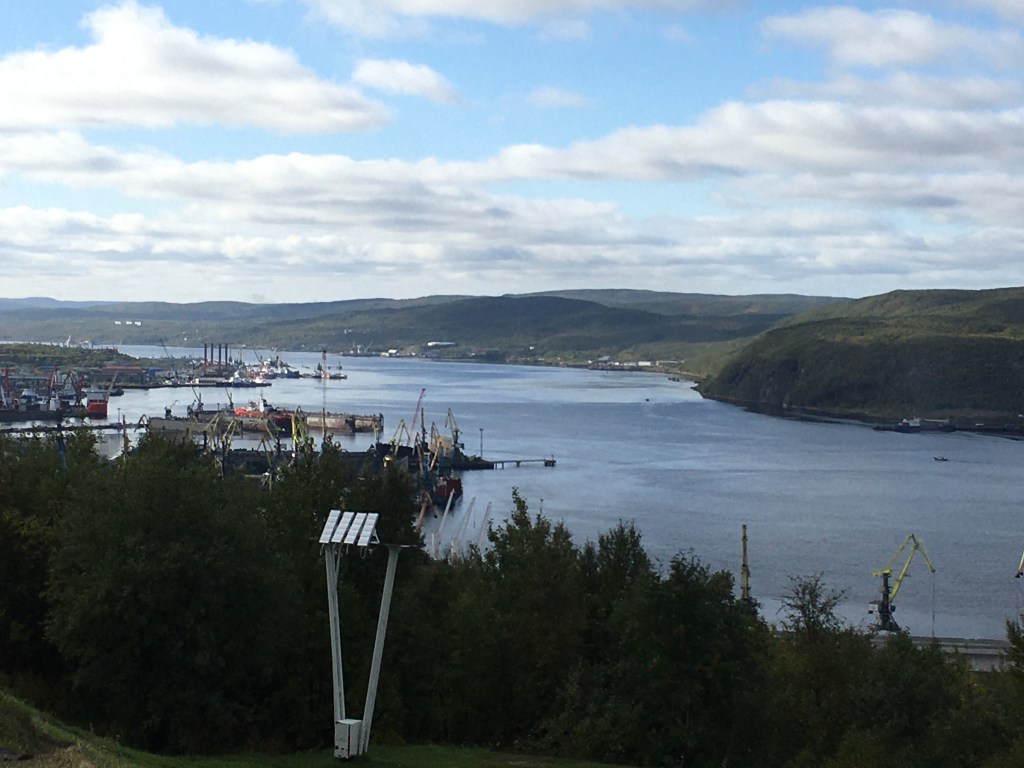
Kola Inlet 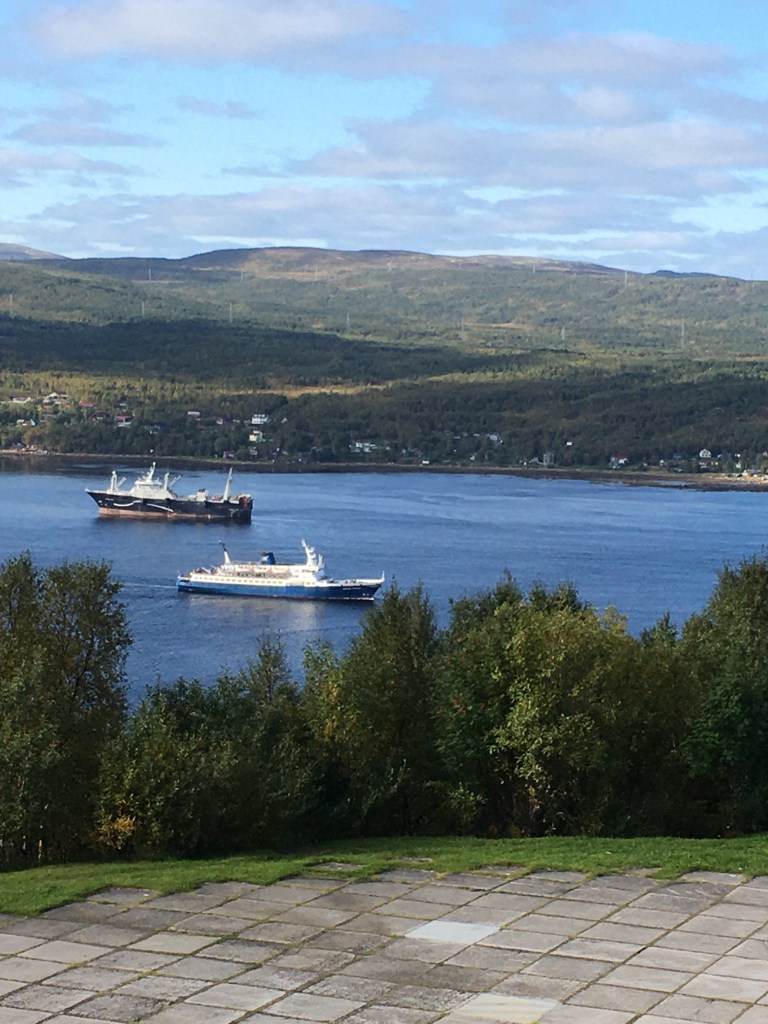
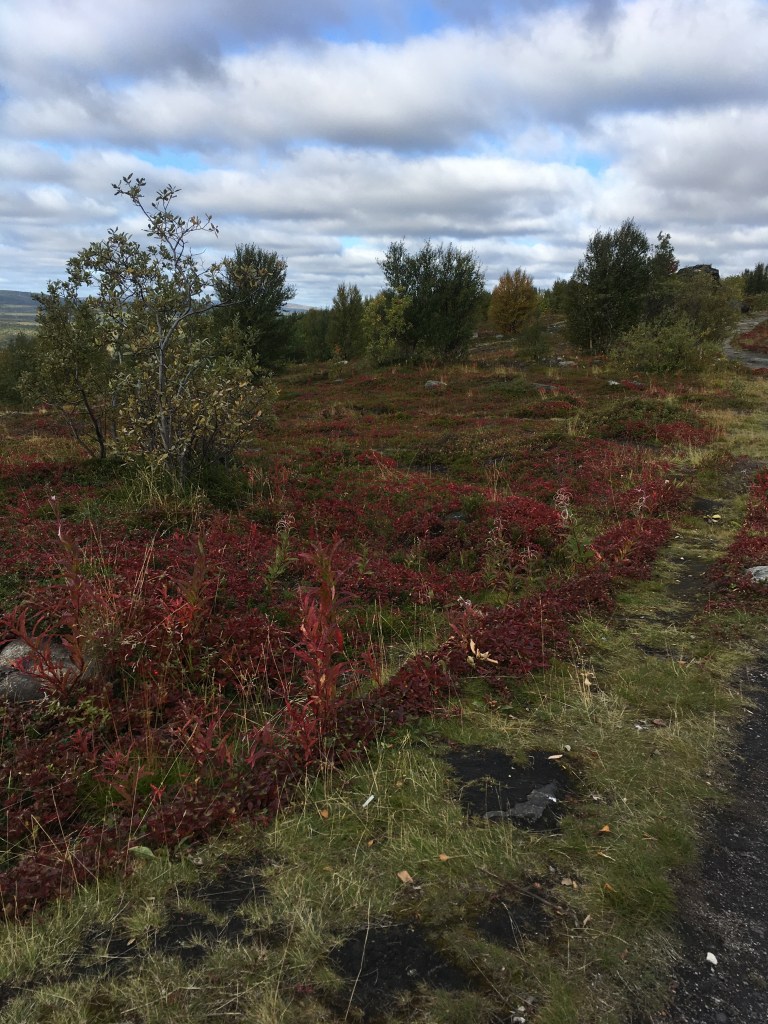
The autumnal colours of the moorland 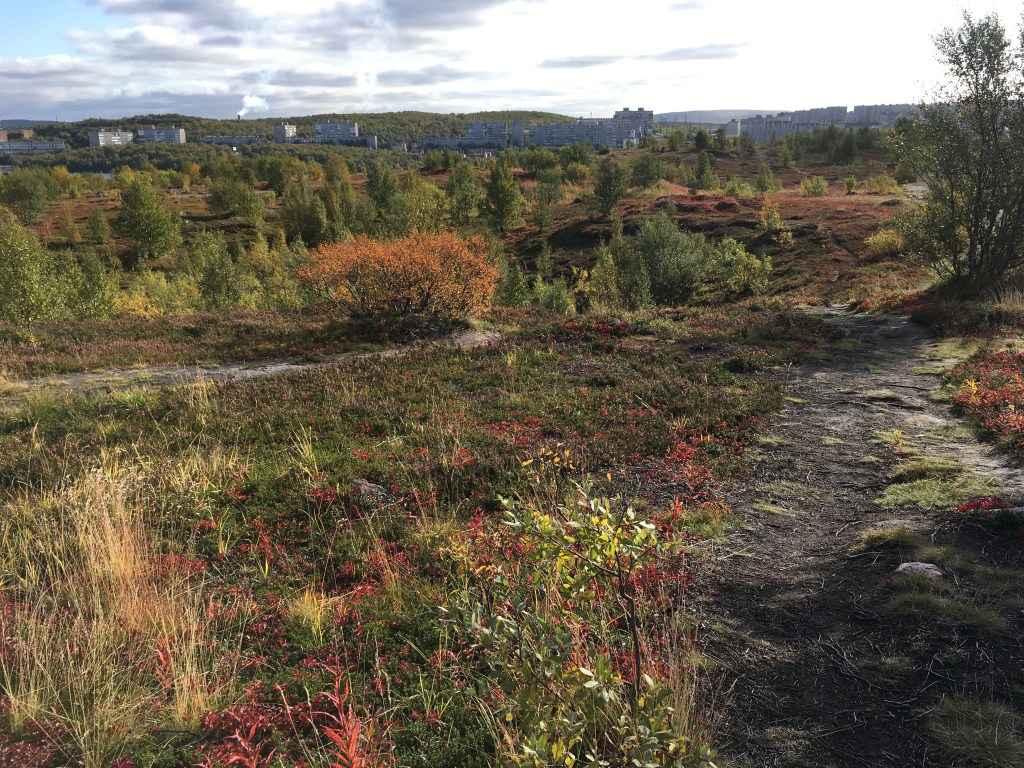
Returning to the town after enjoying the views I walked back through a small memorial park dedicated to sailors lost at sea in peacetime. It contains a church – Church of the Saviour on the Waters – a lighthouse monument and part of the Kursk submarine which sank in 2000 during a naval exercise with all 118 men losing their lives.
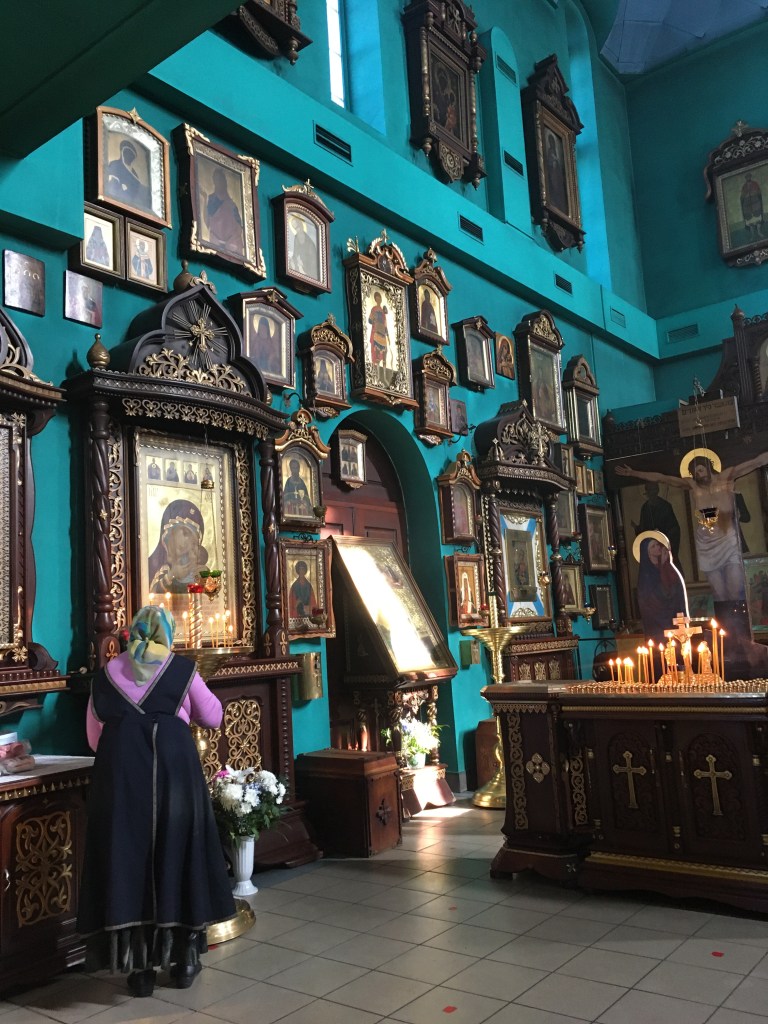
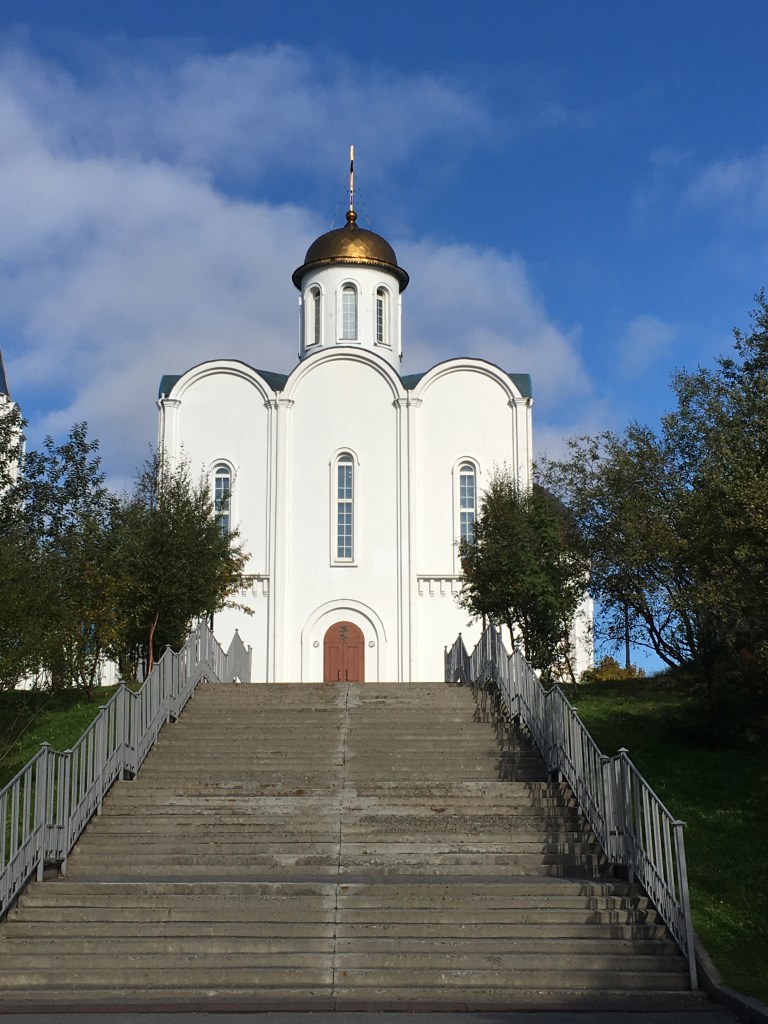
Church of the Saviour on the Waters 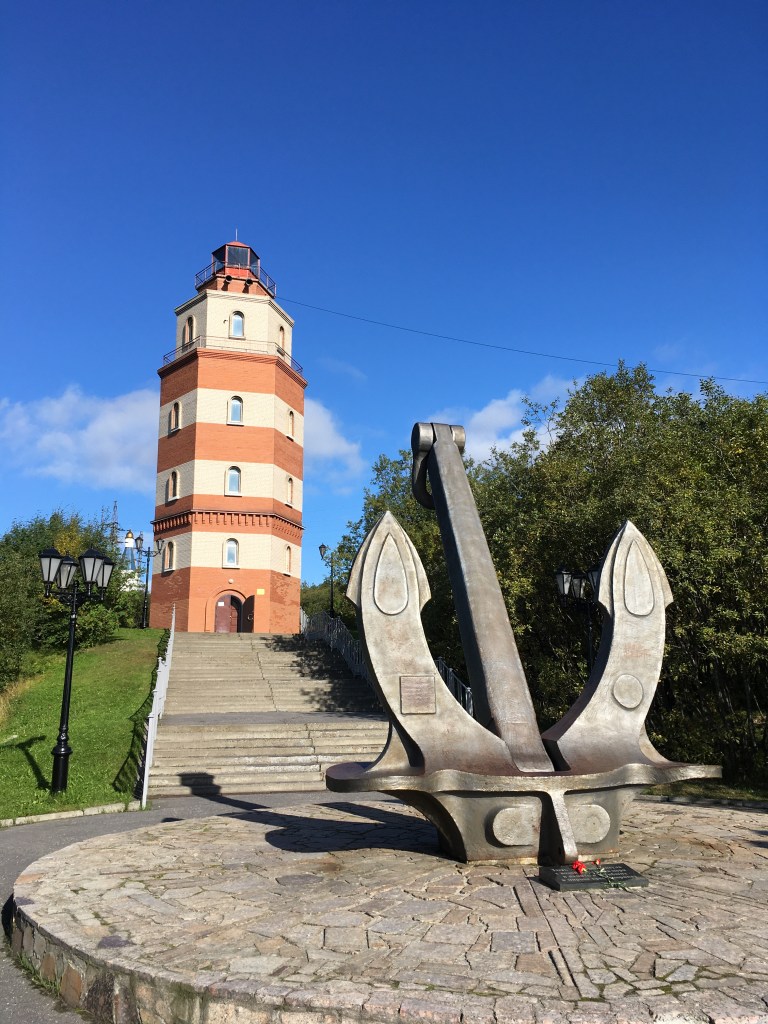
Lighthouse Memorial 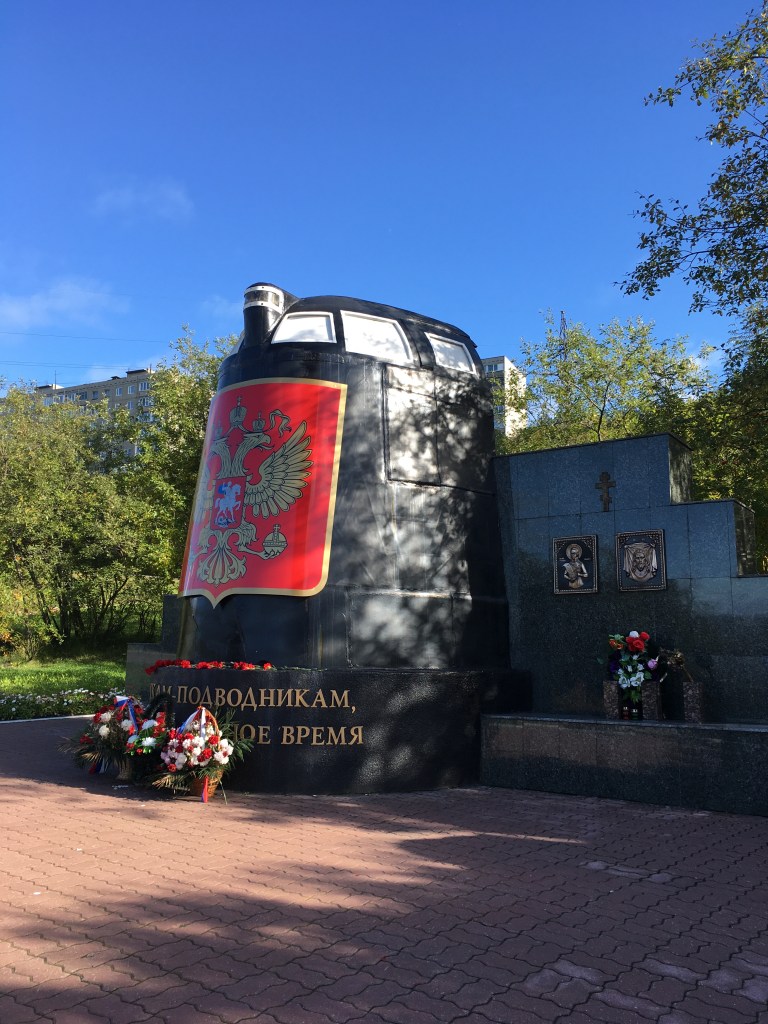
Kursk memorial
Now it was time for lunch so following a tip from a friend I headed to the Start Up cafe for a Raf coffee and an excellent salad. So what to do in the afternoon? Having done the two main sights I decided to visit the Regional Museum of local history. It was very small but well displayed although sadly none of the signs were in English. There was a good display of Sami culture and handicrafts by the local indiginous people and a whole room of stuffed animals!
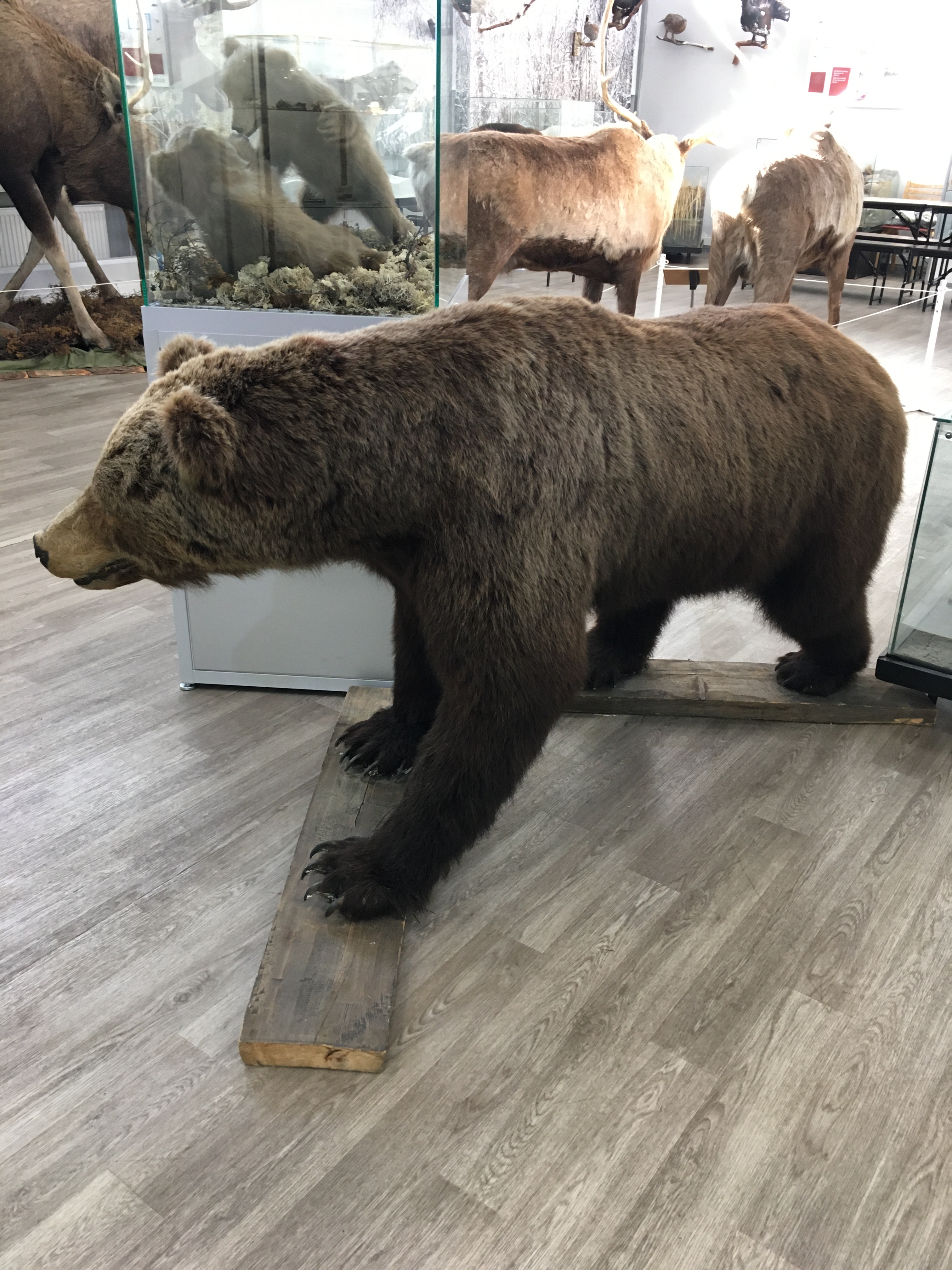
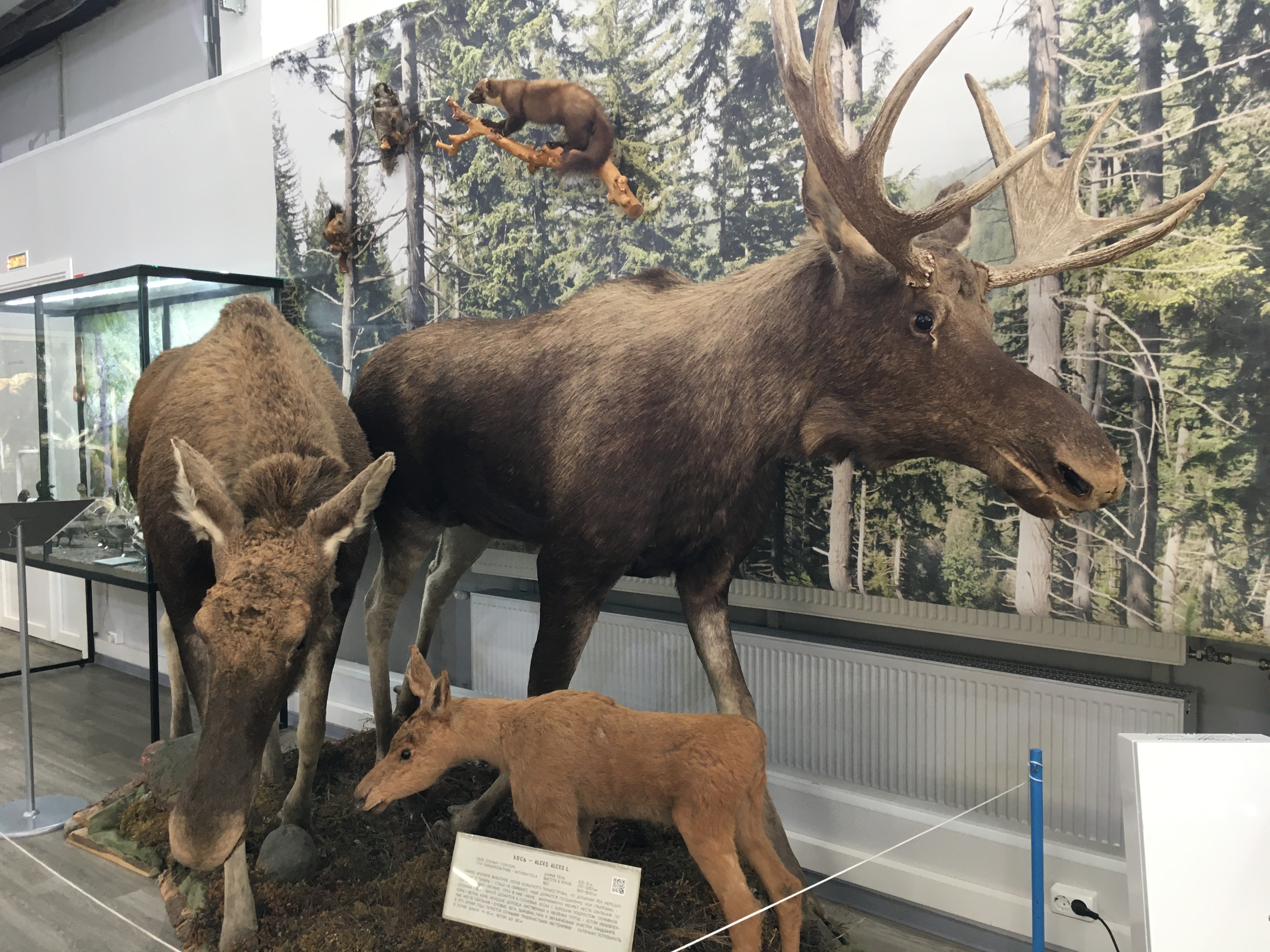
Feeling somewhat weary, having walked 14km, I headed back to our hotel for a rest and to await my husband’s return.
The next day I went on the hunt to find the statue of a Waiting Woman, a monument to all the mothers and wives forever waiting for the return of their loved ones from sea. Sadly I didn’t find it but I did find myself up close and personal with where the Murmansk people live as I wandered through a crumbling high-rise housing estate!
After an excellent lunch of rabbit and mushroom pie at Shtolle, a fabulous pie shop, I went to the Fine Arts Museum. A friend had said that I could while away an hour there, unfortunately I couldn’t – I only managed about 40 minutes! It is TINY. I kept wondering if I had missed the main room but I hadn’t. However the staff couldn’t have been more friendly and helpful. On arrival I asked to buy one ticket in English which sent the lady in the kassa into a bit of flap so I repeated it in Russian. She indicated that she had understood and told me to wait as she got on the phone to an unseen person who presumably spoke English. Slightly bemused, I did as I was told, wondering what was so complicated that she needed a translator to sell me a ticket to the museum. When the second lady appeared she explained that there are several different exhibitions and which ones did I want to see. I chose the two permanent ones and the temporary one on ‘Towels’!!!! The ‘towels’ exhibition turned out to be a tiny room with batik designs on silk scarfs by presumably local, Russian artists. Moving on to the main exhibition hall I found a large room of mostly 20th Century paintings and a handful of royal portraits. Many of the paintings had AR (augmented reality) signs beside them however the phone I use in Russia is so old that it won’t support the AR app so I was able to glean nothing more than the artists name and when it was painted. There did not appear to be any common thread to any of the paintings hanging there! Finally I went into the small exhibition room (very apply named I have to say) where I found icons, and handicrafts. As I tried my best to linger and show an interest in the displayed items the lady on duty called for back-up and my English speaking friend re-appeared to give me some information about what I was looking at. Whilst chatting she told me that when she was studying English during the Soviet times, the best of the best students would get to go to London and they come back telling the others all about the amazing vacuum cleaners we had! As I say the staff were so friendly and obviously very proud of their tiny museum.
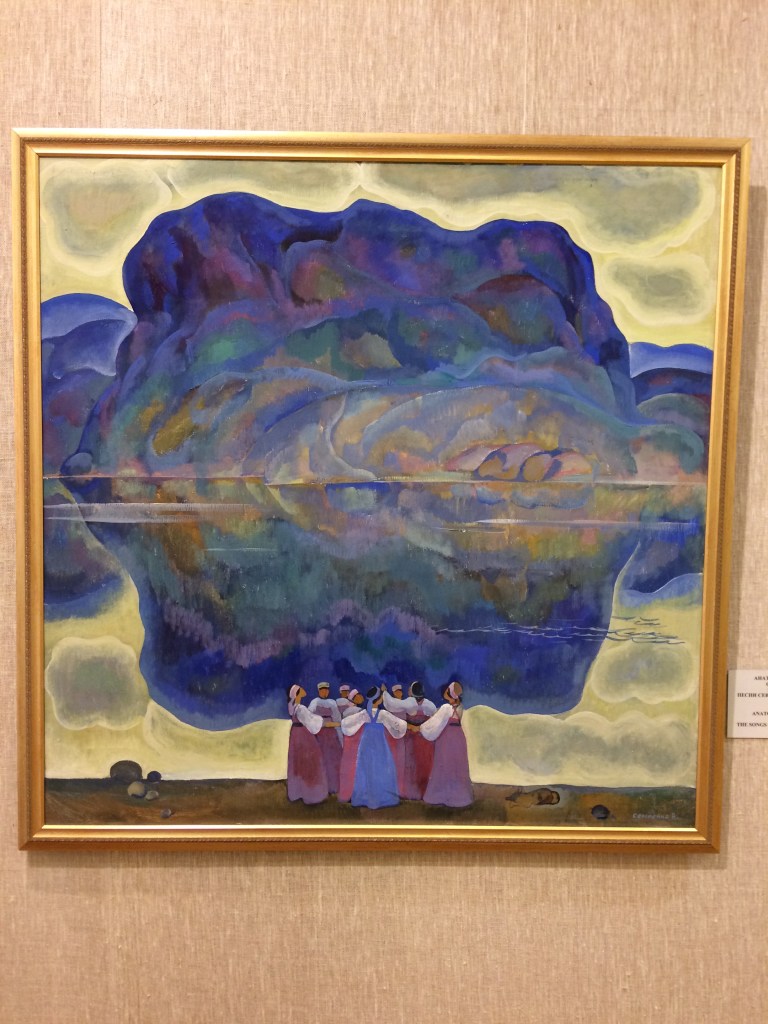
Food in Murmansk was good, especially if you stick to the local food – principally venison in a berry sauce, fish and Murmansk scallops. Tundra seems to be the best regarded restaurant in town and the food and service were both great, but we also enjoyed our meal in Terrasa.
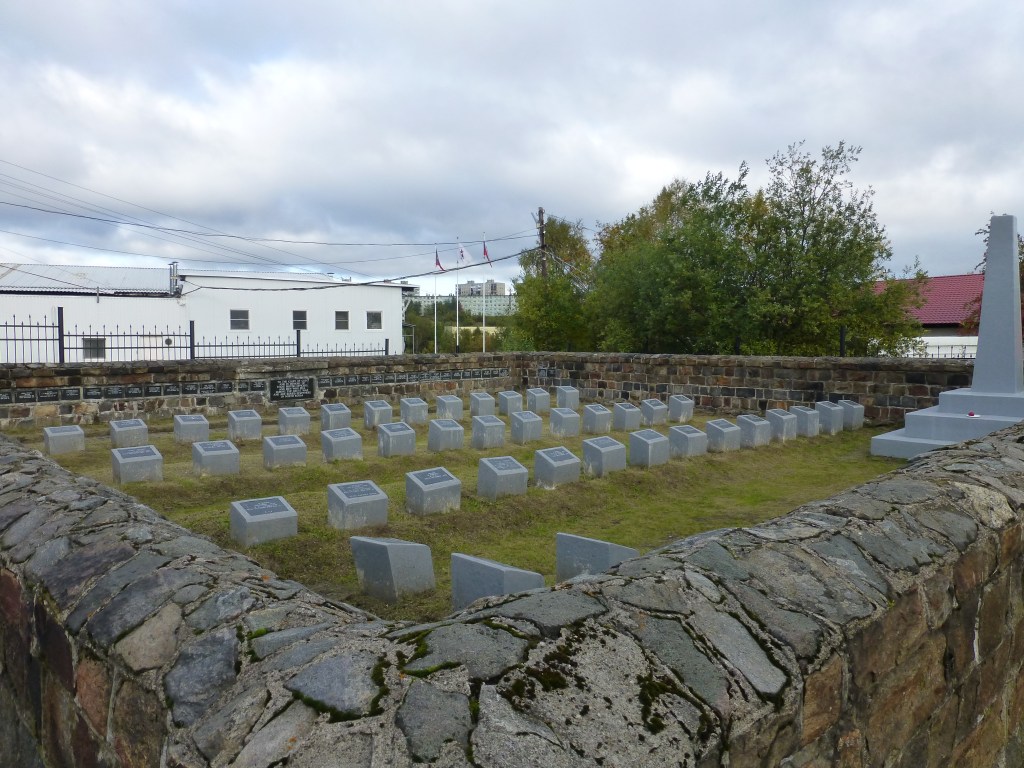
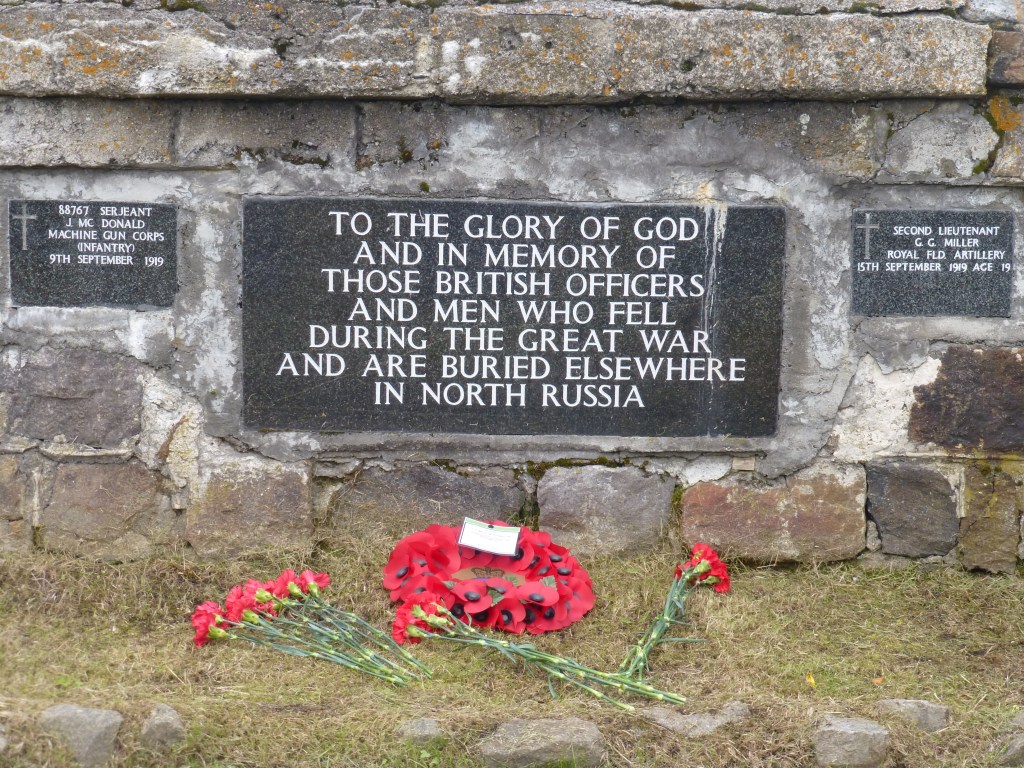
On our final morning we paid a quick visit to the two cemeteries containing the graves of British, Commonwealth and Allied soldiers, sailors and airmen who died in the two World Wars. Many British sailors lost their lives at sea in the Arctic convoys bringing supplies to the Soviet Union, very few of them have graves.
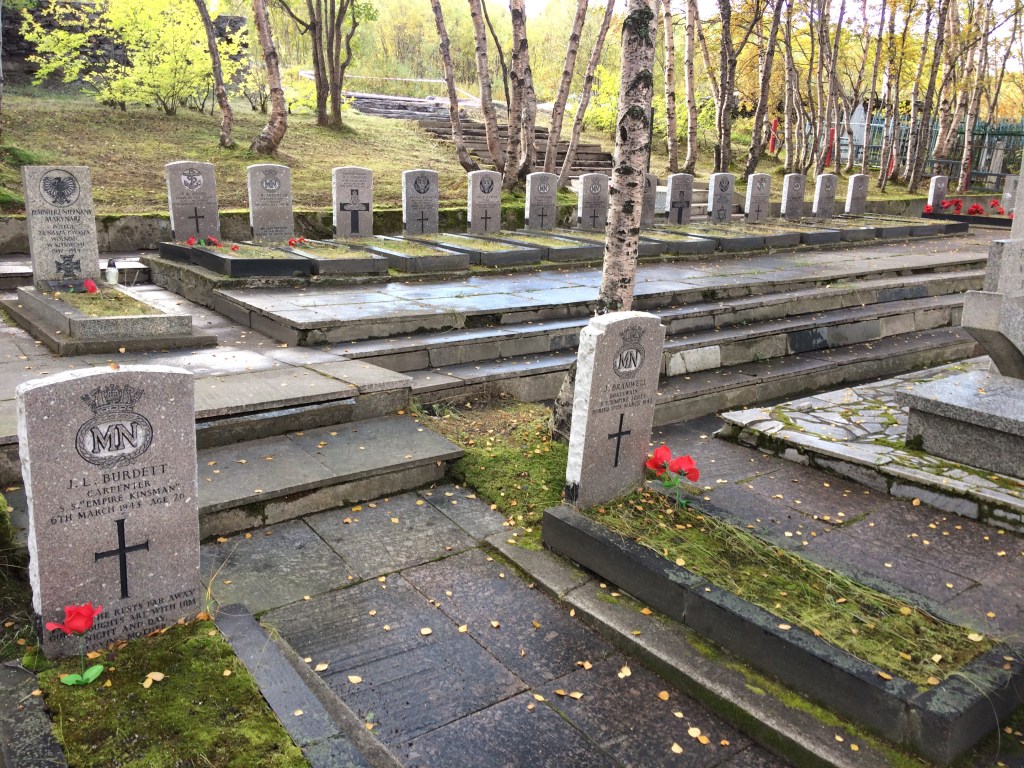
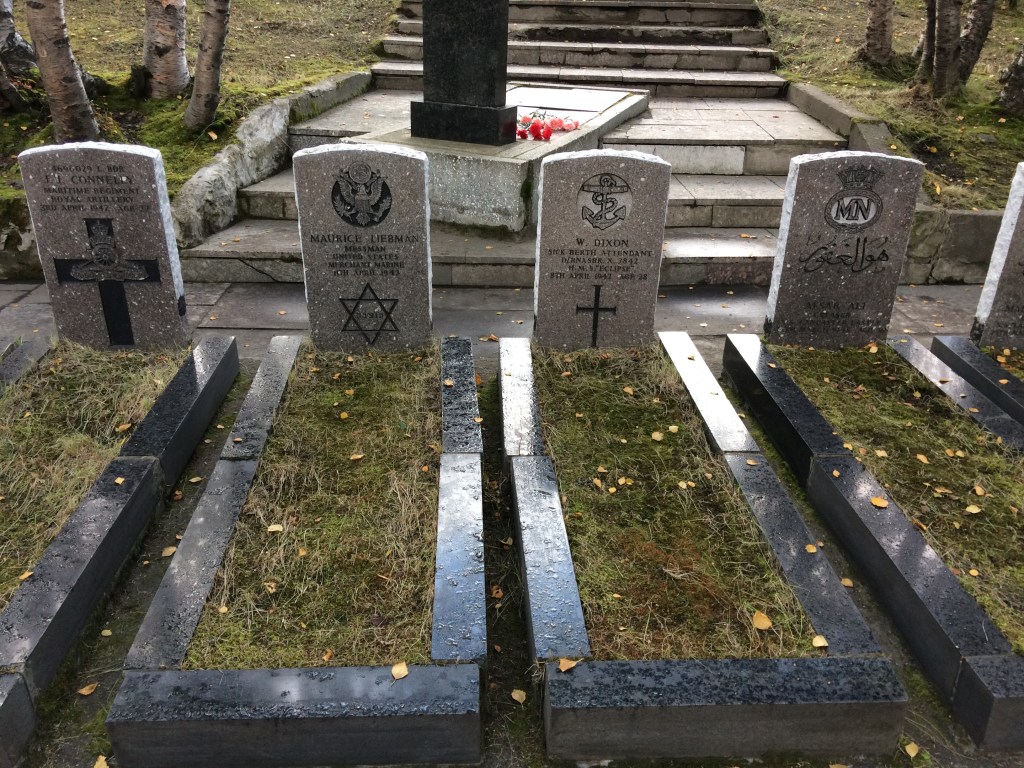
And finally I can’t go without giving a quick mention to my feathered friends who came to say hello every morning as I opened the curtains.
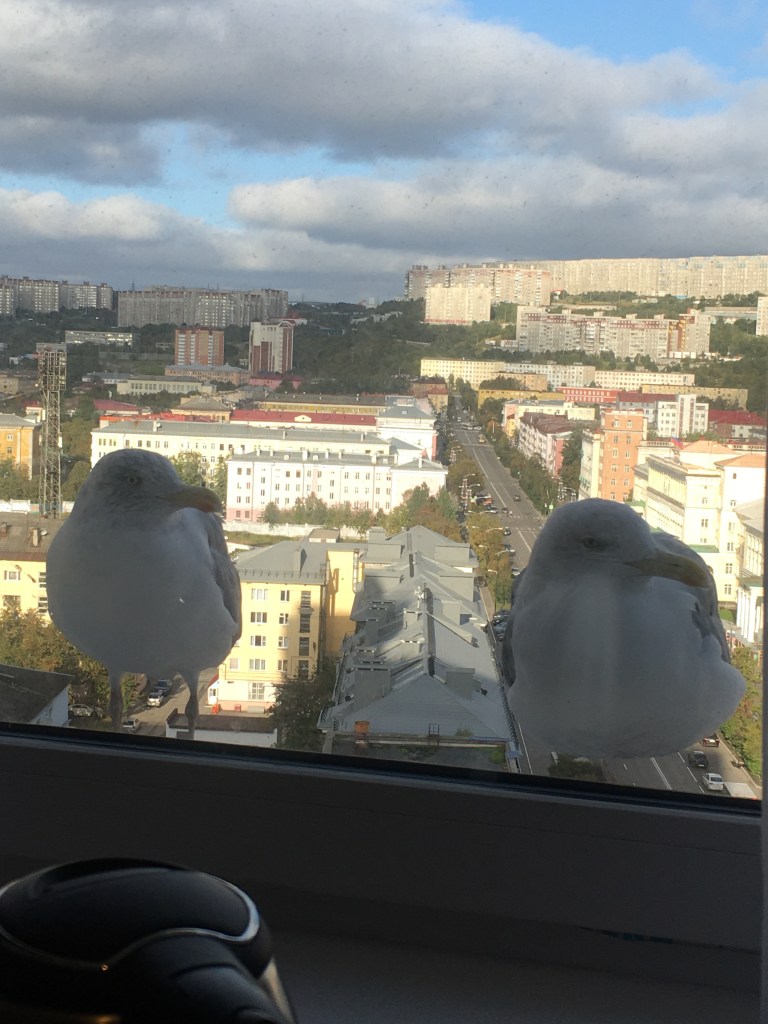
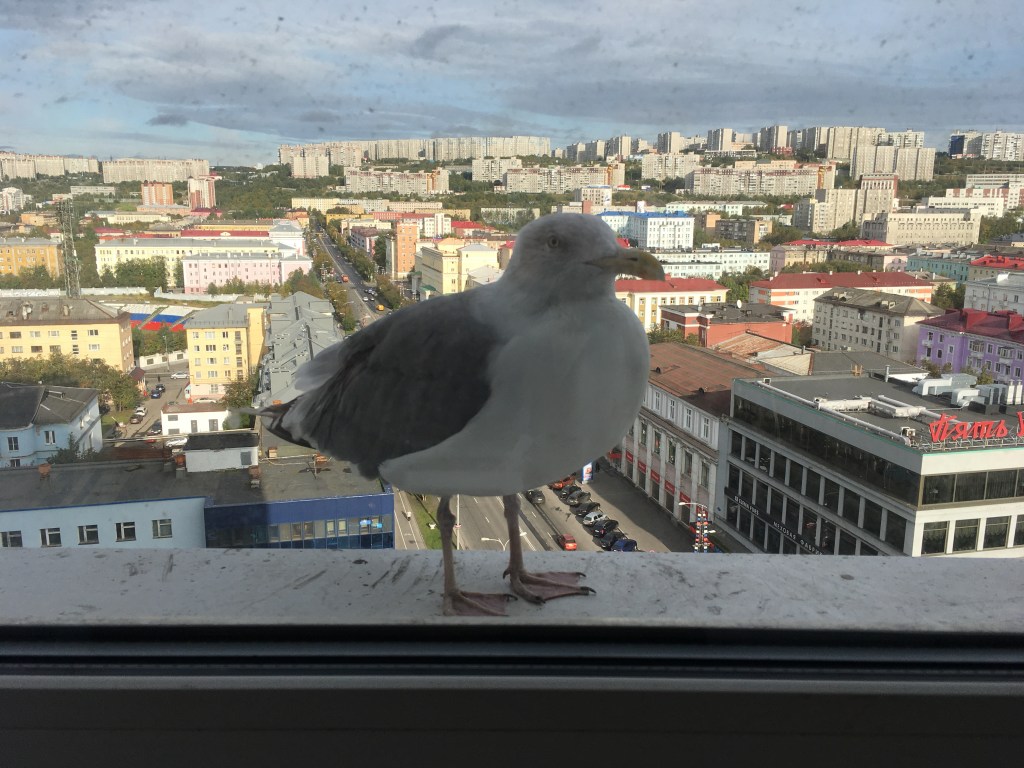

 Russian Reflections
One thought on “Murmansk – Capital of the Arctic”